


Common Challenges in Maintaining PCI Compliant Firewalls across Hybrid Environments

As shops increasingly rely on digital payment systems, cloud applications, online stores, customer WiFi, security devices, and remote access, protecting payment environments has become more complex. A firewall remains an important part of that protection, but simply having one in place is not enough. Businesses need to make sure firewall policies remain appropriate, monitored, documented, and aligned with their security obligations. Maintaining PCI Compliant Firewalls across hybrid environments can be particularly challenging because different systems may operate across physical locations, private networks, cloud platforms, and third-party services. A small configuration change in one environment can sometimes affect the security of another. In this blog, you will learn about the most common firewall management challenges that shops can face in hybrid environments. You will also discover why PCI compliance requirements matter, how PCI DSS firewall requirements influence firewall management, and what businesses can do to create a more manageable approach to compliance and security. Why PCI Compliant Firewalls Matter for Modern Shops For a shop owner, payment security may appear straightforward. A customer taps a card, enters a PIN, or pays through an online checkout, and the transaction is completed within seconds. Behind that simple interaction, however, several systems can communicate with payment platforms, applications, databases, cloud services, and other business networks. A properly configured firewall helps control which connections are permitted and which should be blocked. This can reduce unnecessary exposure and help protect environments that handle payment card information. PCI Compliant Firewalls can support important security practices such as traffic filtering, network segmentation, access restriction, and controlled communication between different systems. The challenge becomes greater when a business does not operate from a single network. A growing retailer may have several physical stores, cloud-based applications, remote administration, online payment services, and third-party platforms. Each component can introduce additional connections that need to be understood and managed. For example, imagine a small clothing retailer that initially has one store and a few payment terminals. Its firewall environment may be relatively simple. After opening additional locations and introducing an online store, cloud accounting, customer WiFi, and remote access, the number of network relationships can increase significantly. This means firewall management needs to evolve alongside the business. In this blog, you will learn how these environments create challenges and why consistent firewall policy management can make security and compliance activities easier to handle. Understanding PCI Compliance Requirements in Hybrid Environments Traditional retail networks were often relatively easy to understand. A business might have computers, payment terminals, a local server, and a single internet connection. Modern shops can have a much more distributed environment. Today, a retailer may use cloud-based inventory software, online payment platforms, customer relationship management applications, remote support tools, wireless networks, security cameras, and multiple locations. Some systems may be hosted locally while others operate entirely in the cloud. This creates additional complexity when addressing PCI DSS compliance requirements. Businesses need to understand which systems are connected to the payment environment, what information moves between them, and whether those connections are actually necessary. They also need to consider how firewall policies are configured across different environments. The PCI DSS compliance requirements are designed to help organizations establish appropriate controls around payment card data. Firewall configurations are an important part of this wider security picture because they can help limit unauthorized communication and reduce unnecessary access. Consider a retailer using a cloud-based inventory platform. The inventory system may need to communicate with selected business applications, but that does not automatically mean every internal system should have access to it. A carefully managed firewall policy can help define these boundaries. Hybrid environments make this more complicated because there may be several security controls operating across different locations. Without centralized visibility, it can become difficult to determine whether policies are consistent and whether older rules still serve a legitimate business purpose. Common PCI DSS Firewall Challenges Inconsistent Firewall Rules One of the most common problems is inconsistent firewall configuration. A growing business may use different firewalls across stores, data centers, cloud environments, or other network segments. Each firewall can contain its own collection of rules, objects, access controls, and configuration settings. Over time, these policies can become difficult to manage. A rule created for a temporary business requirement may remain active after that requirement disappears. Another rule may overlap with an existing policy. In some cases, a broad access rule may provide more connectivity than the business actually needs. For a shop owner, this can create both security and compliance concerns. Regular policy reviews can help identify unnecessary, outdated, or potentially risky rules before they become bigger problems. Limited Network Visibility You cannot effectively manage what you cannot see. Hybrid environments can make network visibility difficult because systems and applications may be spread across multiple locations and platforms. A shop owner may know which payment processor is being used but may not know every system that communicates with the payment environment. This lack of visibility can make security reviews more difficult. Centralized firewall management can provide a clearer view of policies and network access. Instead of manually checking individual devices, security teams can review relevant information from a more unified perspective. Meeting PCI DSS Firewall Requirements The PCI DSS firewall requirements place importance on controlling traffic between trusted and untrusted environments and restricting access where appropriate. In a hybrid environment, this can become challenging because there may be several paths through which systems communicate. For example, a retailer may have a payment network at its physical store, a cloud-based accounting platform, remote technical support, and an online shopping platform. Each connection needs to be evaluated according to its business purpose and security implications. The objective is not to block everything. Businesses still need systems to communicate for legitimate reasons. The goal is to make sure access is controlled, necessary, and appropriately managed. Difficulty Tracking Firewall Changes Firewall policies are rarely static. New applications are added, employees change roles, stores open or close, vendors require temporary access, and payment systems are upgraded. Every
Firewall compliance for PCI-DSS – A complete guide

PCI DSS Firewall Requirements: Complete Guide to Cardholder Data Security In today’s digital economy, businesses process thousands of card transactions every day. Whether you run an eCommerce store, a healthcare organisation, a retail chain, or a financial service company, protecting customer payment data is no longer optional. Cyberattacks are increasing rapidly, and organisations that fail to secure payment systems often face financial penalties, reputational damage, and legal consequences. This is where firewall compliance becomes critical. One of the core requirements of PCI DSS focuses on firewall security because firewalls act as the first line of defence against unauthorised access, malware, and network intrusions. Understanding PCI DSS firewall requirements is essential for businesses that handle payment card information. Without a properly configured firewall, sensitive cardholder data can become vulnerable to cybercriminals, resulting in serious compliance violations. This complete guide explains everything you need to know about firewall compliance for PCI DSS, including requirements, best practices, challenges, implementation strategies, and compliance tips. What Is PCI DSS? The Payment Card Industry Data Security Standard, commonly known as PCI DSS, is a set of cybersecurity standards created to protect payment card data. It was developed by the PCI Security Standards Council and applies to any organisation that stores, processes, or transmits cardholder information. PCI DSS includes several security requirements designed to reduce fraud and strengthen payment system security. Among these requirements, network protection and firewall implementation play a central role. Businesses that fail to meet PCI DSS standards may face the following: Financial penalties Increased transaction fees Legal liabilities Data breach costs Loss of customer trust Suspension of payment processing privileges Because of these risks, organisations prioritise firewall compliance as a key component of their cybersecurity strategy. Why Firewall Compliance Matters for PCI DSS Firewalls protect internal systems from external threats by monitoring and filtering incoming and outgoing network traffic. They create a barrier between trusted and untrusted networks. Under PCI DSS firewall requirements, businesses must establish secure network configurations that prevent unauthorised users from accessing cardholder data environments. A properly managed firewall helps organisations: Block malicious traffic Prevent unauthorised access Reduce attack surfaces Monitor suspicious activity Segment sensitive networks Strengthen compliance posture In simple terms, firewall compliance helps create a secure digital perimeter around sensitive payment information. Understanding PCI DSS Firewall Requirements One of the foundational PCI DSS controls is Requirement 1, which focuses entirely on firewall and network security. The goal is to install and maintain network security controls that protect cardholder data. Here are the major components of PCI DSS firewall requirements. · Install and Maintain Firewall Configurations Organisations must deploy firewalls at every internet connection and between trusted and untrusted networks. These configurations should: Restrict unnecessary traffic Allow only approved services Protect payment environments Prevent unauthorised communication Every firewall rule must have a clear business justification. · Restrict Inbound and Outbound Traffic Businesses should only allow traffic that is necessary for operational purposes. PCI DSS requires organisations to: Deny all unauthorised inbound traffic Control outbound connections Limit risky protocols Use secure communication channels This principle minimises the chances of attackers gaining network access. · Secure Router and Firewall Configurations Default vendor passwords and insecure settings are major cybersecurity risks. PCI DSS firewall requirements demand that organisations: Change default passwords immediately Remove unnecessary services Disable insecure ports Update firmware regularly Failure to secure default configurations is one of the most common compliance mistakes. · Network Segmentation Although network segmentation is not mandatory, it is strongly recommended. Segmentation separates the cardholder data environment from the rest of the business network. This reduces the scope of compliance and limits exposure during a cyberattack. Benefits include: Reduced compliance costs Improved performance Better threat isolation Easier security management Strong firewall compliance strategies usually include segmentation. · Documentation and Rule Reviews PCI DSS requires organisations to maintain detailed documentation of firewall configurations. Businesses must: Review firewall rules regularly Document all changes Maintain network diagrams Validate access permissions Regular audits help identify outdated or risky configurations. Types of Firewalls Used for PCI DSS compliance Different organisations use different firewall technologies depending on their infrastructure and security requirements. Network Firewalls These are traditional firewalls placed between networks to filter traffic based on rules and policies. They are commonly used to: Block unauthorised traffic Control access Monitor network communication Next-Generation Firewalls Next-generation firewalls offer advanced features such as the following: Intrusion prevention Application awareness Threat intelligence Deep packet inspection These firewalls provide stronger protection for modern payment environments. Web Application Firewalls A web application firewall protects websites and online applications from attacks such as SQL injection Cross-site scripting Application layer attacks Businesses operating eCommerce platforms often rely on these solutions. Cloud Firewalls Organisations using cloud environments can deploy virtual firewalls to secure workloads and cloud infrastructure. Cloud firewalls help maintain firewall compliance in hybrid and remote work environments. Common Firewall Compliance Challenges Many organisations struggle to meet PCI DSS firewall requirements because of evolving threats and complex network infrastructures. Poor Rule Management Over time, firewall rules become outdated or excessive. Unused rules create security gaps and increase compliance risks. Regular rule reviews are essential. Lack of Visibility Large organisations often lack visibility into network traffic and firewall configurations. Without centralised monitoring, suspicious activity may go unnoticed. Misconfigured Firewalls Misconfigurations are among the leading causes of data breaches. Examples include: Open ports Weak access controls Unrestricted traffic Insecure remote access Even a single error can compromise cardholder data. Rapid Infrastructure Changes Cloud adoption, remote work, and digital transformation introduce new security challenges. Organisations must constantly adapt firewall policies to maintain compliance. Best Practices for Firewall Compliance Implementing strong firewall strategies helps businesses stay compliant while improving cybersecurity resilience. Follow the Principle of Least Privilege. Only allow users and systems to access resources necessary for their roles. Restricting access reduces the likelihood of insider threats and unauthorised activity. Perform Regular Firewall Audits Frequent audits help identify: Unused rules Weak configurations unauthorised changes Compliance gaps Routine assessments are essential for maintaining firewall compliance. Monitor Traffic Continuously Real-time monitoring allows businesses to
PCI DSS 4.0 Compliance Requirements: New Expectations for Continuous Security Monitoring

As cyber threats continue to evolve, businesses that process, store, or transmit payment card data face growing pressure to strengthen their security posture. The latest version of the Payment Card Industry Data Security Standard, PCI DSS 4.0, introduces significant updates that emphasise continuous monitoring, proactive risk management, and stronger security controls. In this blog, you will learn about the latest PCI DSS compliance requirements, how continuous security monitoring has become a critical component of compliance, and what organisations need to do to meet the new standards while protecting sensitive customer data. Understanding PCI DSS 4.0 The release of PCI DSS 4.0 represents one of the most significant updates to payment card security standards in recent years. While previous versions focused heavily on periodic assessments, the new framework shifts attention toward continuous validation of security controls. This means organisations can no longer rely solely on annual audits or quarterly reviews. Instead, businesses must demonstrate that their security controls remain effective throughout the year. For companies handling payment card information, understanding these evolving PCI compliance requirements is essential for avoiding security gaps, data breaches, and potential financial penalties. Why Continuous Security Monitoring Matters More Than Ever Cybercriminals do not wait for annual compliance reviews. Attacks happen every day, often exploiting vulnerabilities that emerge between assessments. PCI DSS 4.0 addresses this challenge by encouraging organisations to continuously monitor systems, networks, applications, and user activities. For example, if an unauthorised change is made to a firewall configuration, continuous monitoring can detect and alert security teams immediately rather than months later during an audit. This proactive approach helps organisations identify risks before they become costly incidents. Key PCI DSS Compliance Requirements under Version 4.0 Several new and updated PCI DSS compliance requirements focus directly on ongoing security oversight. Enhanced Risk-Based Security Controls Organisations are expected to evaluate risks regularly and adapt controls based on changing threats and business environments. Continuous Log Monitoring Security logs must be reviewed consistently to identify suspicious activity and potential compromise attempts. Stronger Authentication Practices Multi-factor authentication requirements have expanded, helping reduce unauthorised access risks. Automated Security Validation Businesses are encouraged to leverage automation tools that continuously verify security control effectiveness. These changes reflect a broader industry trend toward real-time security management rather than reactive compliance efforts. The Growing Importance of PCI DSS Firewall Requirements Firewalls remain one of the most important layers of defence in any payment card environment. The updated PCI DSS firewall requirements place greater emphasis on proper configuration management, documentation, and ongoing validation. Organisations must ensure firewall rules are aligned with business needs and do not introduce unnecessary exposure. Regular testing, monitoring, and maintenance are now considered critical components of maintaining compliance and protecting cardholder data. Understanding PCI DSS Firewall Rule Review A thorough PCI DSS firewall rule review helps identify outdated, redundant, or risky rules that could create security vulnerabilities. Many organisations accumulate firewall rules over time as systems evolve. Without periodic reviews, unnecessary access permissions can remain active for years. Conducting structured firewall rule reviews ensures that only approved and justified traffic is allowed through the network. This practice strengthens both security and overall firewall compliance efforts. Real World Security Challenges Businesses Face Imagine an online retailer processing thousands of transactions daily. A minor firewall misconfiguration accidentally exposes a critical server to the internet. Without continuous monitoring, the issue may remain unnoticed until attackers exploit it. With PCI DSS 4.0 aligned monitoring processes in place, security teams receive immediate alerts and can resolve the issue before customer data is affected. This practical example demonstrates why continuous monitoring has become a cornerstone of modern compliance programmes. When Your Organisation Needs Advanced Compliance Support Many businesses struggle to keep pace with changing regulations, expanding IT environments, and increasingly sophisticated cyber threats. Warning signs often include: Difficulty tracking security controls Limited visibility into network activity Inconsistent firewall management processes Resource constraints within internal security teams Concerns about passing future compliance assessments In these situations, partnering with experienced compliance and security specialists can help simplify the process while improving protection. Beyond Compliance: Operational Benefits of Continuous Monitoring Meeting compliance standards is important, but the benefits extend much further. Continuous monitoring can improve operational efficiency by reducing downtime, accelerating incident response, and providing better visibility into security performance. Organisations often find that stronger monitoring processes improve customer trust and support long-term business growth. How to Choose the Right Security and Compliance Approach When evaluating security solutions, businesses should look for providers that offer: Continuous monitoring capabilities Firewall management expertise Automated compliance reporting Scalable security controls Ongoing support and guidance The right partner should help your organisation meet both current and future compliance expectations while reducing operational complexity. Final Thoughts PCI DSS 4.0 marks a significant shift toward proactive cybersecurity and continuous oversight. Organisations that embrace ongoing monitoring, strengthen their PCI DSS firewall requirements, and prioritise regular PCI DSS firewall rule review processes will be better positioned to maintain compliance and defend against emerging threats. If your business is preparing for updated PCI DSS compliance requirements, explore the security and compliance solutions available through Opinnate. The right strategy today can help safeguard your business and customer trust for years to come. Frequently Asked Questions 1. What is PCI DSS 4.0? PCI DSS 4.0 is the latest version of the Payment Card Industry Data Security Standard designed to improve payment card data protection through stronger and more flexible security requirements. 2. Why is continuous security monitoring important in PCI DSS 4.0? Continuous monitoring helps organisations identify security threats and control failures in real time rather than waiting for periodic audits. 3. What are PCI DSS firewall requirements? PCI DSS firewall requirements focus on configuring, managing, testing, and maintaining firewalls to protect cardholder data from unauthorised access. 4. How often should a PCI DSS firewall rule review be performed? Organisations should conduct regular reviews based on business needs and compliance requirements to ensure firewall rules remain secure and necessary. 5. How can businesses simplify PCI compliance requirements? Businesses can simplify compliance by
Why Continuous Firewall Optimization Outperforms Traditional Annual Rule Reviews
Blog Overview Cybersecurity threats are evolving faster than ever, and businesses can no longer rely on outdated security practices. Many organizations still conduct firewall reviews once a year, assuming that annual checks are enough to keep their networks secure. However, today’s dynamic threat landscape demands a more proactive approach. In this blog, you will discover why continuous firewall optimization is becoming the preferred strategy for modern organizations, how it improves security and operational efficiency, and why businesses that embrace firewall automation gain a significant advantage over those relying solely on annual reviews. The Problem with Traditional Annual Firewall Reviews For years, annual firewall audits were considered an acceptable security practice. Businesses would review firewall rules, remove outdated entries, and verify compliance once every twelve months. The challenge is that modern networks change constantly. Employees join and leave, cloud applications are added, remote access requirements evolve, and new business processes emerge throughout the year. When firewall rules remain unchecked for months, unnecessary permissions can accumulate. These outdated rules increase security risks and make network management more complicated. By the time the annual review arrives, businesses may be dealing with hundreds or even thousands of rules that require evaluation. This approach often creates blind spots that cybercriminals can exploit. Why Continuous Firewall Optimisation Matters Continuous firewall optimisation focuses on ongoing monitoring, analysis, and improvement of firewall policies rather than waiting for an annual review cycle. With advanced firewall analysis tools, organisations can identify misconfigurations, redundant rules, and potential vulnerabilities as they appear. This means security teams can respond immediately instead of discovering issues months later. Modern firewall automation solutions further simplify the process by automatically identifying risky rule changes, tracking compliance requirements, and recommending policy improvements. As a result, businesses maintain stronger protection while reducing manual workloads. Continuous firewall optimisation also improves visibility across complex network environments, helping organisations stay ahead of emerging threats. The Business Impact of Smarter Firewall Management Security is only one piece of the puzzle. Poorly managed firewall policies can slow down business operations, create application connectivity issues, and increase administrative overhead. Regular firewall performance optimisation ensures that security controls support business objectives rather than becoming obstacles. For example, an online retailer experiencing slow transaction processing may discover that outdated firewall rules are causing unnecessary traffic inspection delays. Continuous monitoring helps identify these issues quickly, improving customer experience and operational efficiency. Businesses that invest in firewall automation often find that their IT teams spend less time on repetitive tasks and more time on strategic initiatives. A Real-World Scenario Every Business Can Relate To Imagine a growing retail company that introduces several new cloud-based applications during the year. Each application requires new firewall rules to support employee access and customer transactions. Over time, temporary rules are added, old applications are retired, and network requirements shift. Without ongoing firewall analysis, these changes can create overlapping policies, security gaps, and performance bottlenecks. With continuous firewall optimisation, every change is reviewed, validated, and adjusted as needed. The company maintains stronger security while ensuring seamless business operations. This proactive approach helps prevent problems before they affect customers or employees. Signs Your Firewall Strategy Needs an Upgrade Many organisations assume their firewall is working perfectly simply because no major incidents have occurred. However, several warning signs suggest it’s time to rethink your approach: Frequent Policy Changes If firewall rules are modified regularly, annual reviews may not provide sufficient oversight. Increasing Network Complexity Hybrid environments, cloud services, and remote work introduce new challenges that require continuous monitoring. Compliance Pressure Many industries face strict regulatory requirements that demand ongoing security visibility and reporting. Performance Concerns Slow applications, connectivity issues, or network delays may indicate a need for firewall performance optimisation. Beyond Security: Operational Benefits of Continuous Monitoring Continuous firewall optimisation delivers benefits that extend beyond cybersecurity. Organisations often experience the following: Faster troubleshooting Improved network reliability Better compliance management Reduced administrative burden Greater visibility into network activity Improved business continuity A modern firewall analyser provides valuable insights that help IT teams make informed decisions while maintaining a secure and efficient network environment. How to Choose the Right Firewall Optimisation Approach When evaluating solutions, look for platforms that offer: Automated policy analysis Real-time monitoring capabilities Compliance reporting features Intelligent risk assessment Scalable management for growing networks The right firewall automation strategy should align with your organization’s security goals while supporting long-term business growth. Final Thoughts The days of relying solely on annual firewall reviews are quickly fading. Today’s cyber threats and rapidly changing network environments require continuous attention and proactive management. Continuous firewall optimisation empowers organisations to strengthen security, improve operational efficiency, and reduce compliance challenges while staying ahead of evolving risks. If your business is ready to modernise its security posture, explore the advanced security and compliance solutions available at Opinnate. Their expertise in firewall performance optimisation and compliance management can help your organisation build a stronger, more resilient network infrastructure for the future. Frequently Asked Questions 1. What is firewall optimisation? Firewall optimisation is the process of continuously reviewing, improving, and managing firewall rules to enhance security, performance, and compliance. 2. How does firewall automation improve security? Firewall automation reduces human error, identifies risky configurations faster, and streamlines policy management through automated workflows. 3. Why is firewall analysis important? Firewall analysis helps organisations identify vulnerabilities, redundant rules, compliance gaps, and performance issues before they become serious problems. 4. What does a firewall analyser do? A firewall analyser monitors firewall activity, evaluates policies, generates reports, and provides actionable insights for better network security management. 5. How often should firewall rules be reviewed? While annual reviews were once common, modern best practices recommend continuous firewall optimisation with ongoing monitoring and regular policy assessments throughout the year.
Why Firewall Policy Management Must Evolve for Hybrid and Multi-Cloud Environments

Blog Overview Hybrid and multi cloud architectures introduce new security challenges. This article explores why modern Firewall Policy Management is essential, when businesses should upgrade their approach, and how organizations can make better decisions to improve operational efficiency and security. Introduction Modern enterprises are rapidly moving toward hybrid and multi-cloud infrastructures to improve flexibility, scalability, and resilience. However, as environments become more distributed, managing security policies becomes increasingly complex. Traditional approaches no longer provide the visibility and control organisations need. In this blog, you will learn why firewall policy management must evolve for hybrid and multi-cloud environments, and you will discover practical strategies to strengthen security without slowing innovation. You will also understand how automation, visibility, and smarter tools can help simplify network security policy management across complex infrastructures. The Shift to Hybrid and Multi-Cloud Environments Organisations today operate across on-premises data centres, private cloud environments, and multiple public cloud providers. This flexibility supports business growth but also creates security gaps if not properly managed. For example, a company may deploy applications across different cloud platforms while maintaining legacy systems internally. Each environment has its own firewall rules and configurations. Without centralised firewall policy management, teams struggle to maintain consistency and visibility. This is where modern network security policy management becomes essential. Why Traditional Firewall Policy Management Falls Short Traditional firewall management relies heavily on manual processes and isolated configurations. These approaches were designed for static environments, not dynamic cloud infrastructures. Common challenges include limited visibility across environments, inconsistent security rules, slow change management, and higher risk of misconfigurations. In many cases, security teams manually update policies, which increases the chances of human error. A firewall rule analyser can help identify redundant or risky rules, but without automation and centralised control, organisations still face operational inefficiencies. Why Modern Firewall Policy Management Matters Modern firewall policy management helps organisations maintain consistent security across hybrid and multi-cloud environments. It enables centralised control, policy automation, and real-time visibility. For example, a firewall analyser allows security teams to review traffic patterns and detect potential vulnerabilities quickly. Combined with firewall change automation, organisations can implement policy updates faster while reducing risk. This approach improves compliance, enhances security posture, and supports faster deployment cycles. Real-World Challenges Businesses Face Many businesses experience policy sprawl as they expand into multiple cloud environments. Security teams often struggle to track which rules apply to which workloads. For instance, a growing SaaS company may deploy services across two cloud providers. Without centralised management, duplicate rules and outdated policies accumulate over time. This increases security risk and slows down performance. With effective firewall policy management, teams gain better control and reduce operational complexity. When Security Complexity Starts Slowing Innovation There comes a point when manual firewall management becomes a bottleneck. Businesses may notice slower deployments, frequent configuration errors, or compliance challenges. This is often the right time to adopt smarter solutions like firewall change automation and advanced firewall rule analyser tools. These technologies simplify operations and support business growth without compromising security. Operational Benefits beyond Security Modern firewall policy management delivers benefits beyond protection. It improves operational efficiency, reduces manual workloads, and enhances collaboration between teams. Organisations gain faster deployment cycles, improved compliance readiness, reduced downtime, and better resource utilisation. Security teams can focus on strategic initiatives rather than repetitive tasks. In many cases, businesses also reduce operational costs by minimising manual management efforts. How to Choose the Right Firewall Policy Management Approach When evaluating solutions, businesses should prioritise visibility, automation, scalability, and integration capabilities. Look for platforms that support hybrid and multi-cloud environments seamlessly. Consider solutions that provide centralised dashboards, policy analysis, and automation capabilities. A strong network security policy management platform should also support compliance reporting and audit readiness. These features help organisations stay secure while supporting digital transformation. A Smarter Future for Network Security Hybrid and multi-cloud environments are here to stay. As infrastructures grow more complex, organisations must evolve their security strategies. Modern firewall policy management provides the flexibility, visibility, and control needed to manage distributed environments effectively. Businesses that adopt intelligent automation and centralised management gain a competitive advantage while strengthening their security posture. Final Thoughts Firewall policy management is no longer optional for organisations operating in hybrid and multi-cloud environments. With the right tools and strategy, businesses can simplify security, reduce risk, and accelerate innovation. If your organisation is looking to modernise its network security policy management, explore how Opinnate can help you gain better visibility, streamline firewall change automation, and optimise firewall performance. Get in touch with us today to discover smarter security solutions designed for modern enterprises. Frequently Asked Questions 1. What is firewall policy management? Firewall policy management involves creating, monitoring, and optimising firewall rules to ensure secure network traffic across environments. 2. Why is firewall policy management important for hybrid environments? Hybrid environments increase complexity, making centralised policy management essential for consistent security. 3. What does a firewall rule analyser do? A firewall rule analyser reviews policies to detect unused, risky, or redundant rules. 4. How does firewall change automation help businesses? Firewall change automation reduces manual errors and speeds up policy updates. 5. What is network security policy management? Network security policy management ensures consistent security controls across distributed infrastructures.
How Organizations Can Meet PCI DSS Compliance Requirements through Automated Firewall Policy Monitoring
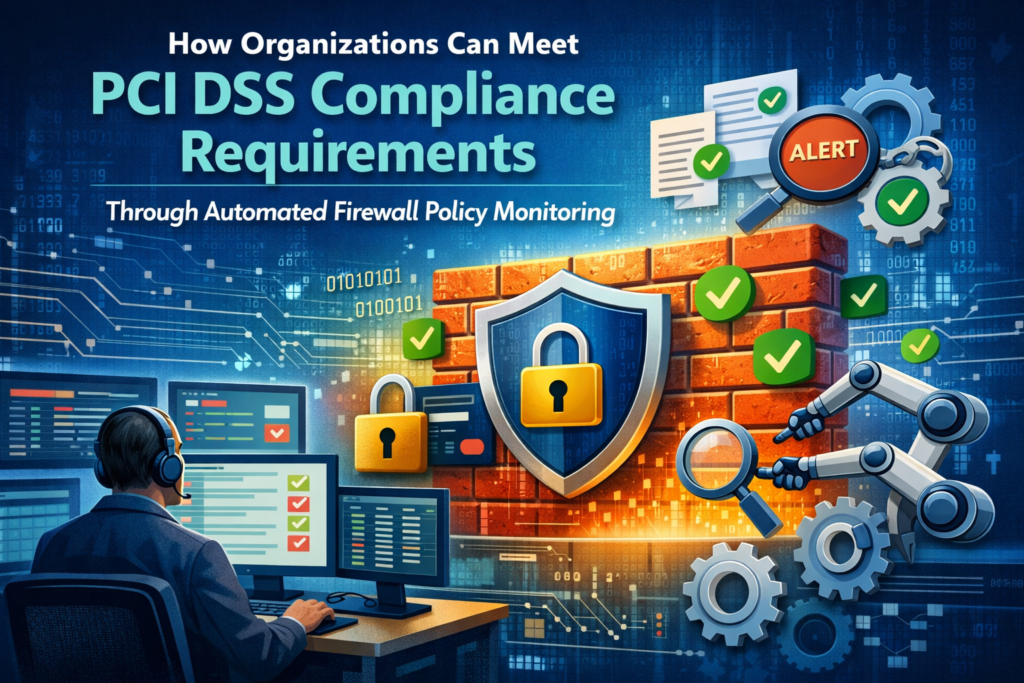
Blog Overview For modern organizations that process online payments or store cardholder data, compliance is not optional. Meeting the complex requirements of payment card security frameworks can feel overwhelming, especially when network environments grow larger and more dynamic. In this blog, you will learn how automated firewall policy monitoring helps organizations meet critical pci compliance requirements while reducing manual work and security risks. You will also understand the challenges businesses face when managing firewall rules, the role automation plays in maintaining pci dss compliance requirements, and practical steps companies can take to strengthen their compliance posture. This guide is designed for IT leaders, security professionals, and enterprise decision makers who want to simplify compliance while improving network security. Understanding the Challenge of PCI DSS Compliance Organizations that handle payment card data must follow strict regulatory rules to protect customer information. These rules are known as pci dss compliance requirements, which focus on protecting cardholder data through strong security practices. One of the most important aspects of these requirements is firewall configuration. Firewalls control network traffic and prevent unauthorized access to sensitive data. However, maintaining accurate firewall policies across complex networks is difficult. Large enterprises often operate hundreds or even thousands of firewall rules across different locations, cloud environments, and data centers. Over time, outdated rules, human errors, and misconfigurations can creep into the system. Even a small configuration mistake can lead to compliance failures or security vulnerabilities. This is where automated firewall policy monitoring becomes essential. It ensures that firewall configurations remain aligned with pci compliance requirements at all times. Why Firewall Monitoring Matters for Payment Security Firewalls act as the first line of defense between internal systems and external threats. Payment card industry regulations emphasize strict firewall controls to prevent unauthorized access to cardholder data environments. Continuous monitoring ensures that firewall rules remain compliant with evolving security compliance standards. Without monitoring, organizations may not notice unauthorized changes, misconfigurations, or rule conflicts until a security audit reveals them. For example, imagine a large e commerce company that frequently updates its infrastructure. Each infrastructure change may require adjustments to firewall rules. If these changes are not tracked and verified, the organization could unknowingly violate pci dss compliance requirements. Automated monitoring helps security teams detect policy violations immediately and resolve them before they impact compliance. How Automated Firewall Policy Monitoring Works Automated firewall policy monitoring tools analyze firewall configurations continuously and compare them against predefined compliance frameworks. These tools detect misconfigurations, redundant rules, and unauthorized policy changes in real time. Instead of relying on manual audits, automation evaluates policies across multiple firewalls simultaneously. This approach helps organizations maintain consistent compliance across hybrid networks. For instance, a global financial services company might manage dozens of firewalls across cloud platforms and on premises infrastructure. Automated monitoring platforms can review these configurations instantly and flag anything that violates pci compliance requirements. Advanced platforms also generate compliance reports automatically. These reports help organizations demonstrate adherence to pci dss compliance requirements during regulatory audits. Practical Business Scenarios Where Automation Makes a Difference In many cases, organizations struggle with compliance not because they lack security tools but because they lack visibility. Consider a retail chain that operates hundreds of stores connected to a central payment processing network. Each store may have its own firewall rules to manage local network traffic. Over time, inconsistent rule changes across stores can create compliance gaps. Automated firewall policy monitoring centralizes visibility. Security teams can review firewall policies across all locations from a single dashboard. This allows them to identify violations quickly and ensure alignment with pci compliance requirements. Another example involves cloud migration. As companies move workloads to cloud environments, firewall policies must adapt to new network architectures. Automation ensures these changes remain compliant with pci dss compliance requirements. When Organizations Should Strengthen Their Firewall Compliance Strategy Many businesses wait until an audit failure or security incident before addressing firewall policy issues. However, proactive monitoring can prevent these problems entirely. Organizations often benefit from automated monitoring when they experience rapid infrastructure growth, frequent policy changes, or complex hybrid environments. For example, enterprises expanding into multi cloud environments face increasing challenges in maintaining consistent firewall policies. Automation becomes essential for maintaining visibility and compliance. Solutions such as nspm for large enterprises provide centralized network security policy management across distributed infrastructures. This approach helps organizations maintain policy consistency while ensuring continuous compliance. Operational Benefits beyond Compliance While compliance is a primary goal, automated firewall policy monitoring offers several operational advantages. First, it reduces the workload on security teams. Instead of manually reviewing firewall configurations, teams receive automated alerts when issues arise. This allows them to focus on higher value security tasks. Second, automation improves response time. Misconfigurations that could previously go unnoticed for weeks can now be identified within minutes. Third, organizations gain stronger audit readiness. Automated compliance reports simplify documentation and help security teams prepare for regulatory assessments with confidence. These operational improvements ultimately strengthen overall cybersecurity while ensuring organizations consistently meet pci compliance requirements. How to Choose the Right Solution for Your Organization Not all compliance tools offer the same capabilities. When evaluating automated firewall policy monitoring platforms, organizations should consider several factors. First, ensure the platform supports real time monitoring across hybrid environments including on premises networks, cloud platforms, and virtual firewalls. Second, the solution should provide clear compliance mapping. This allows organizations to align firewall policies directly with pci dss compliance requirements. Third, look for advanced reporting and visualization features. These capabilities make it easier for security teams and auditors to understand policy changes and risk exposure. Finally, scalability matters. Enterprises with complex infrastructures need tools that can grow alongside their networks. Future Ready Security for Modern Enterprises As digital transformation accelerates, network environments become increasingly complex. Payment systems now span cloud infrastructure, remote work environments, and interconnected applications. This complexity makes manual compliance management nearly impossible. Automated firewall policy monitoring provides the visibility and control organizations need to stay secure and compliant. Businesses that invest in automation today
How Automated Firewall Policy Management Enables Effective Network Microsegmentation and Zero Trust Networks
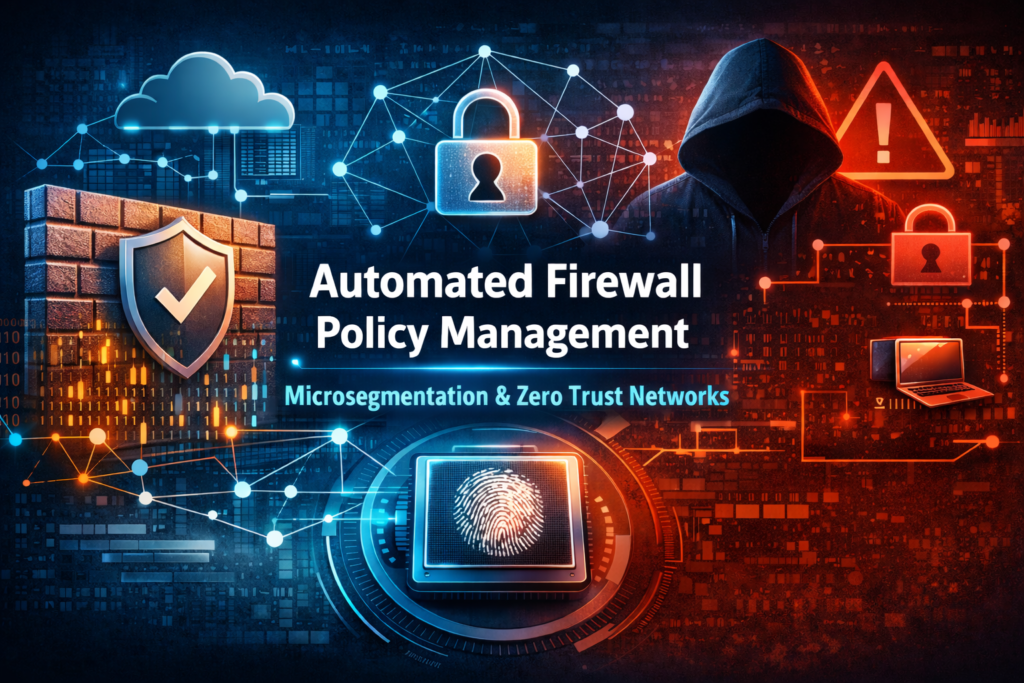
Blog Overview Modern enterprises manage thousands of applications, users, and devices across hybrid environments. As networks expand, traditional security models struggle to keep up with increasingly complex access rules. In this blog, you will learn how automated firewall policy management helps organizations simplify rule governance, strengthen network microsegmentation, and build resilient Zero Trust architectures. You will also discover practical benefits, real world scenarios, and tips for choosing the right solution for your business. Introduction: The Security Challenge in Modern Networks Enterprise networks have changed dramatically over the last decade. Organizations now operate across cloud platforms, remote work environments, SaaS applications, and distributed infrastructure. Each of these layers requires strict access controls to prevent unauthorized movement across systems. In this blog, you will explore how automated firewall policy management helps security teams maintain visibility and control over thousands of firewall rules. You will also see how automation supports network microsegmentation, a strategy that isolates workloads and prevents threats from spreading inside the network. Without proper automation, managing firewall rules becomes overwhelming. Manual configuration increases the risk of errors, outdated policies, and security gaps. This is where modern security platforms step in to simplify network firewall rule management and create a scalable defense strategy. Why Automated Firewall Policy Management Matters Firewalls remain a critical layer of defense for enterprise networks. However, many organizations still rely on manual processes to manage firewall policies. Over time, rules accumulate and become difficult to track. Automated firewall policy management addresses this challenge by centralizing policy control, monitoring rule changes, and ensuring compliance across environments.Key advantages include Improved visibility across all firewall policies Reduced configuration errors Faster deployment of security rules Simplified compliance auditing Consistent enforcement across hybrid environments Automation also supports stronger firewall security management by continuously analyzing traffic patterns and identifying risky configurations before they become vulnerabilities.For IT teams managing multiple firewall vendors or cloud environments, this automation is often the difference between reactive security and proactive defense. How Network Microsegmentation Strengthens Security One of the most powerful strategies enabled by automation is network microsegmentation. Traditional network security often protects only the perimeter. Once attackers enter the network, they may move laterally between systems. Microsegmentation changes this model by dividing the network into smaller, isolated zones. Each segment has its own security policies that control communication between workloads. Benefits of network microsegmentation include: Limiting lateral movement during cyber attacks Protecting sensitive applications and data Reducing the attack surface inside the network Improving regulatory compliance for industries like finance and healthcare When combined with automated firewall policy management, security teams can quickly define and enforce segmentation policies without manually configuring thousands of firewall rules. Supporting Zero Trust Architecture with Smart Policy Automation The Zero Trust security model operates on a simple principle. Never trust, always verify. This approach assumes that no user, device, or application should automatically be trusted inside the network. Every request must be verified based on identity, context, and security posture. Automated firewall policy management plays a vital role in implementing Zero Trust networks because it enables organizations to enforce strict access policies at scale. Through automation, businesses can Control communication between services and applications Continuously verify network access permissions Dynamically update policies based on risk signals Enforce least privilege access across environments When paired with network microsegmentation, Zero Trust architecture becomes significantly more effective because each network segment enforces independent access controls. When Businesses Realize They Need Smarter Security Control Many organizations only recognize the importance of automation after facing operational challenges.Common signs include Firewall rules becoming too complex to audit Security teams spending hours reviewing policy changes Difficulty identifying which rules support specific applications Compliance audits taking weeks instead of days At this stage, automated network firewall rule management becomes essential. Instead of manually reviewing every configuration, intelligent tools analyze policies, detect conflicts, and recommend optimizations. Companies often find that automation dramatically reduces the time spent managing firewall infrastructure. Operational Benefits beyond Security While stronger security is the primary goal, automated policy management also improves operational efficiency. Organizations frequently report improvements such as: Faster application deployment cycles Simplified network change management Reduced downtime caused by misconfigured rules Better collaboration between security and DevOps teams For example, when a new application is deployed in the cloud, automation can instantly generate the required policies and apply segmentation rules without manual intervention. This ensures that security keeps pace with innovation rather than slowing it down. Real World Example from Enterprise Networks Consider a global enterprise running hundreds of applications across multiple cloud platforms and data centers. Without automation, security teams would need to manually track thousands of firewall policies. Any small configuration mistake could expose sensitive workloads .By implementing automated firewall policy management, the company can visualize traffic flows, create segmentation policies, and enforce Zero Trust principles across all environments. As a result, their infrastructure becomes more secure while reducing operational overhead. How to Choose the Right Firewall Policy Strategy Selecting the right approach to firewall management requires careful evaluation. Businesses should consider the following factors Centralized visibility across network environments Integration with cloud and hybrid infrastructure Automated policy analysis and risk detection Support for segmentation strategies Scalability for growing networks A good solution should simplify rule management while supporting advanced strategies like network microsegmentation and Zero Trust security frameworks. Organizations that invest in automation early often find it easier to scale their security operations as their networks expand. Final Thoughts Modern enterprise networks require smarter security strategies. As organizations expand across cloud platforms, remote work environments, and complex infrastructures, traditional firewall management approaches can no longer keep up. Automated firewall policy management allows businesses to maintain control, reduce complexity, and strengthen protection across their networks. By enabling effective network microsegmentation and supporting Zero Trust architecture, automation transforms firewall policies from static rules into dynamic security controls. If your organization is looking to simplify network firewall rule management while strengthening security visibility and compliance, it may be time to explore modern policy automation solutions. To learn how advanced automation platforms can help you
How to Achieve 90 Percent Efficiency in Firewall Management through Rule Optimization?

How well you manage, monitor, and improve your firewall environment is what makes your network security strong. As businesses grow, their networks and firewall rules become more complicated. This complexity can make things run slowly, hide security holes, and make operations less efficient. The good news is that if you optimize your rules the right way, you can get your firewall management process to work up to 90% more efficiently. In this blog, you will learn about firewall rule optimization, why it matters, and how modern tools like a firewall analyzer and advanced firewall policy management platforms can help keep things organized and improve security without increasing the workload for your IT team. Why Is It More Important Than Ever to Optimize Firewall Rules? Most organizations add new firewall rules over time but rarely remove outdated ones. As a result, policies become bloated, decision-making slows down, and the risk of misconfigurations increases. Optimizing firewall rules is a critical part of improving the accuracy and effectiveness of your overall firewall management strategy. With effective rule optimization, organizations can: Reduce unnecessary rule overlaps Identify redundant and unused rules Strengthen the overall security posture Improve traffic inspection speed Lower operational burden on security teams When firewall rules are clean and well-structured, your firewall works smarter—not harder. Understanding the Power of Firewall Policy Management Firewall policy management involves monitoring, controlling, and maintaining all security rules across your network. When implemented correctly, it brings clarity, accountability, and consistency to security operations. A well-structured firewall policy ensures that every rule has a clear purpose and aligns with compliance requirements. Modern security teams rely on automated platforms that centralize policy creation, modification, and enforcement. This removes guesswork and ensures consistent rule deployment across devices, environments, and locations. Advanced tools also help track policy compliance, visualize traffic flows, and eliminate shadowed or conflicting rules that degrade performance. How a Firewall Analyzer Helps You Achieve High Efficiency A powerful firewall analyzer provides deep visibility into how firewall rules perform in real time. Instead of manually reviewing hundreds of rules, the analyzer instantly highlights unused rules, risky configurations, duplicate entries, and poorly performing rules that require attention. These insights enable security teams to act quickly and proactively. By resolving issues early, organizations improve network hygiene while significantly reducing the workload on IT teams. Firewall analyzers also support: Compliance and audit reporting Traffic flow visualization Impact analysis before rule changes Rapid detection of misconfigurations The Role of Firewall Rule Management in Boosting Efficiency Firewall rule management is a continuous lifecycle that includes creating, reviewing, updating, and retiring rules. It is not a one-time activity. The cleaner and more optimized your rule base is, the faster your firewall can process incoming and outgoing traffic. An effective firewall rule management approach includes: Removing outdated or unused rules Reordering rules for faster processing Grouping related rules to simplify maintenance Validating rule intent before every change Automating routine checks and analysis Best Practices for Firewall Rule Management Effective firewall rule management requires a structured approach to reviewing, organizing, and optimizing rules throughout their lifecycle. Security teams should regularly assess rule usage, remove obsolete or duplicate entries, and verify that each rule has a clearly defined business purpose. Reviewing rule order and identifying conflicting or shadowed rules can also improve traffic processing efficiency. By combining regular audits with automated analysis and continuous monitoring, organizations can maintain a cleaner rule base, reduce configuration errors, and strengthen overall network security without adding unnecessary operational complexity. Last Thoughts Firewall management today is no longer just about allowing or blocking traffic it is about building a streamlined and efficient security environment. With the right combination of firewall policy management, a robust firewall analyzer, and continuous firewall rule management, organizations can unlock up to 90% efficiency through intelligent optimization. If you want a cleaner, faster, and more secure network, it starts with optimizing your firewall rules today. Boost your security efficiency with intelligent firewall management powered by Opinnate—and take control of your network with confidence. Frequently Asked Questions 1. What is firewall policy management? Firewall policy management is the process of creating, reviewing, organizing, updating, and enforcing firewall rules across a network. It helps security teams maintain consistent policies, control network traffic, reduce configuration errors, and ensure that firewall rules align with security and business requirements. 2. Why is firewall policy management important for network security? Effective firewall policy management helps organizations identify outdated, redundant, conflicting, or overly permissive rules that could create security risks. By continuously monitoring and optimizing firewall policies, security teams can reduce the attack surface, improve network performance, and simplify ongoing security operations. 3. What is firewall rule optimization? Firewall rule optimization is the process of reviewing and improving firewall rules to remove unnecessary, duplicate, unused, or conflicting entries. It helps create a cleaner rule base that can improve traffic processing efficiency and strengthen the overall security posture. 4. How does a firewall analyzer help manage firewall rules? A firewall analyzer provides visibility into firewall rule usage and configuration. It can identify unused rules, duplicate entries, risky configurations, and potential conflicts, enabling security teams to resolve issues faster and reduce the effort required for manual rule reviews. 5. How often should firewall rules be reviewed? Firewall rules should be reviewed regularly and whenever there are significant changes to network infrastructure, applications, users, or security requirements. Continuous monitoring and periodic audits help ensure that outdated or unnecessary rules do not remain active. 6. What are the benefits of effective firewall rule management? Effective firewall rule management can improve network performance, reduce security risks, simplify policy maintenance, and lower the operational workload for IT teams. It also helps organizations maintain accurate and consistent firewall configurations as their networks evolve. 7. How can organizations improve firewall management efficiency? Organizations can improve firewall management efficiency by removing outdated rules, reordering rules for faster processing, consolidating related rules, validating changes before deployment, and automating routine analysis. These practices help maintain an optimized firewall environment while reducing manual effort and configuration errors.
Top Strategies for Effective Firewall Management: Analyzing Shadowed, Expired, and Permissive Rules
In the current fast-paced digital landscape, firewalls remain the first line of defense against cyber threats. However, as networks become increasingly complex, so do firewall configurations, and managing them effectively can become a daunting task. Outdated, redundant, or overly permissive rules can quietly weaken your network security posture without you even realizing it. That is where effective firewall management and tools like a firewall analyzer play a vital role. In this blog, we will explore the top strategies to streamline your firewall policy management, identify hidden risks like shadowed and expired rules, and build a robust network security policy management framework that strengthens your organization’s defenses. Understanding the Complexity of Firewall Rules Every organization’s network evolves as new applications are added, users change roles, and business needs shift. In the process, firewall rules multiply. What starts as a simple security setup can quickly turn into hundreds or even thousands of rules. The problem? Not all these rules remain relevant. Some become shadowed (overridden by other rules), some expire without being removed, and others stay too permissive, giving broader access than necessary. These hidden issues can expose your organization to risks, impact performance, and make audits a nightmare. Regular Firewall Rule Audits: The Foundation of Good Management The first step in maintaining effective firewall management is conducting regular rule audits. These audits help identify rules that are no longer used, conflict with others, or violate compliance standards. Using an advanced firewall analyzer automates this process, scanning rule sets for redundancy, conflicts, or risks. With the right tool, security teams can visualize the entire firewall configuration, making it easier to pinpoint and address weak spots before they turn into vulnerabilities. Pro Tip: Schedule rule reviews quarterly or biannually and assign accountability to ensure outdated or risky rules don’t linger unnoticed. Identifying and Eliminating Shadowed Rules Shadowed rules occur when one rule (usually higher up in the order) prevents another from ever being triggered. While harmless at first glance, they create unnecessary clutter and confusion. To fix this: Use a firewall policy management tool that can automatically detect shadowed or unused rules. Reorder, merge, or remove redundant entries to maintain clarity and efficiency. Document each change for audit trails and accountability. Cleaning up shadowed rules not only improves performance but also strengthens visibility — ensuring every rule in place has a clear purpose. Managing Expired and Temporary Rules Temporary firewall rules are often added to enable short-term access or testing, but are rarely removed afterward. Over time, these expired rules can leave open doors for potential threats. To prevent this: Always set expiration dates for temporary rules. Leverage network security policy management systems that automatically flag expired or unused policies. Conduct monthly reviews to remove or renew rules as needed. Automation is your friend here. A proactive management process ensures temporary access doesn’t become a permanent vulnerability. Minimizing Permissive Rules for Tighter Security Permissive rules are those that allow “any-any” or overly broad access, and are one of the most common security gaps in firewall configurations. While they may simplify operations, they significantly increase attack surfaces. To minimize risks: Apply the principle of least privilege (POLP), which gives access strictly based on necessity. Use segmentation to isolate critical systems and minimize lateral movement. Employ a firewall analyzer that continuously scans for permissive or overly broad rules and provides actionable remediation steps. By tightening permissions, organizations can significantly reduce the likelihood of internal misuse or external attacks. Automating Firewall Policy Management Manual firewall administration is both time-consuming and prone to human error. Adopting firewall policy management automation tools can help simplify the entire lifecycle — from policy creation and validation to deployment and decommissioning. Automation ensures: Consistent application of policies across devices. Real-time detection of conflicts or compliance violations. Faster response to security incidents. Modern network security policy management platforms integrate AI-driven analytics, giving IT teams the visibility and control needed to adapt quickly to evolving threats. Continuous Monitoring and Compliance Reporting Effective firewall management isn’t a one-time project — it is an ongoing process. Continuous monitoring provides visibility into real-time network behavior, while automated reporting supports compliance with frameworks like ISO 27001, GDPR, or PCI DSS. Regular monitoring ensures that every change, rule, and configuration aligns with organizational security standards and best practices. Proactive Firewall Management Is Smart Security As cyber threats evolve, your firewall should too. By auditing regularly, analyzing shadowed and expired rules, tightening permissive access, and leveraging automation through a powerful firewall analyzer, you can build a dynamic, secure, and compliant network environment. Smart firewall management is not just about protecting data; it’s also about enabling your business to grow confidently in a secure digital landscape. At Opinnate, we simplify firewall management with next-generation automation and advanced firewall analyzer capabilities designed to give your IT and security teams complete visibility and control. Strengthen your security posture and simplify your firewall operations with Opinnate — where smart automation meets uncompromising protection.
How a Firewall Analyzer Can Uncover Hidden Bottlenecks in Your Network Traffic

Speed and security go hand in hand in today’s digital scenario. Though many companies invest in cyber security tools, they often fail to notice the issue that is most prominent and slows down productivity. Yes, you guessed that right! The most ignorant issue is the hidden bottleneck in your network traffic, and that is where the role of firewall analyzers arises. In this blog, you will gain insights into why a firewall analyzer is important and why it is essential to invest in one. To know more, read the blog ahead! Let Us Understand Why Bottlenecks Are Hard to Spot Mostly, firewalls are designed to protect, but sometimes they also become a reason behind inefficiency—especially when a business relies on hundreds of firewall rules. Delays can be caused by misconfigured rules, redundant policies, or poor sequencing. Without the right visibility, business performance dips. The main issue behind all this is poor firewall policy management. What Is a Firewall Analyzer? Now, you must be wondering what exactly the role of a firewall analyzer is. A firewall analyzer is a web-based tool for change management, configuration analysis, and security audits of firewall devices. It also helps with bandwidth monitoring and security reporting. The software analyzes firewall configurations, manages configuration changes, and audits the security of devices. It collects, analyzes, and archives logs from network perimeter security devices and generates insightful reports. What Hidden Bottlenecks Can a Firewall Analyzer Reveal? Many bottlenecks are deeply hidden in firewall policies, which can cause issues that are nearly impossible to detect manually. Some of them include: Overlapping or redundant rules that slow down traffic processing Unused and outdated policies that add unnecessary load Improper sequencing of rules forcing more checks than needed Unnoticed traffic surges due to lack of visibility How Do Firewall Analyzers Identify Bottlenecks? The real power of a firewall analyzer lies in turning hidden complexities into actionable insights. Here’s how it works: 1. Log Analysis Firewall analyzers collect and interpret logs from firewalls to understand network traffic patterns. This includes data like IP addresses, ports, protocols, and traffic volume to provide a comprehensive view of network activity. 2. Traffic Pattern Visibility By analyzing logs, administrators can identify which applications, services, and users consume the most bandwidth. This visibility helps in pinpointing devices or processes causing congestion. 3. Firewall Rule Optimization These tools review the firewall rule base to find unused, duplicate, or outdated rules. Optimizing these rules streamlines legitimate traffic and removes performance roadblocks. 4. Proactive Monitoring Firewall analyzers enable both real-time and historical analysis, helping teams track performance trends, forecast capacity needs, and address issues before they grow into major problems. Why Should Businesses Invest in Network Security Management? Using a firewall analyzer is not just about enhancing security—it’s about improving overall efficiency. Businesses that invest in such tools benefit from: Faster and more reliable network performance Stronger network security management with optimized policies Reduced downtime and improved business continuity Cost savings by avoiding unnecessary infrastructure upgrades Final Thoughts Firewalls are essential for security, but without proper oversight, they can become bottlenecks. A firewall analyzer can uncover these hidden issues and help your business run faster, safer, and smarter networks. If you are serious about optimizing both performance and security, consider using Opinnate firewall management solutions.