


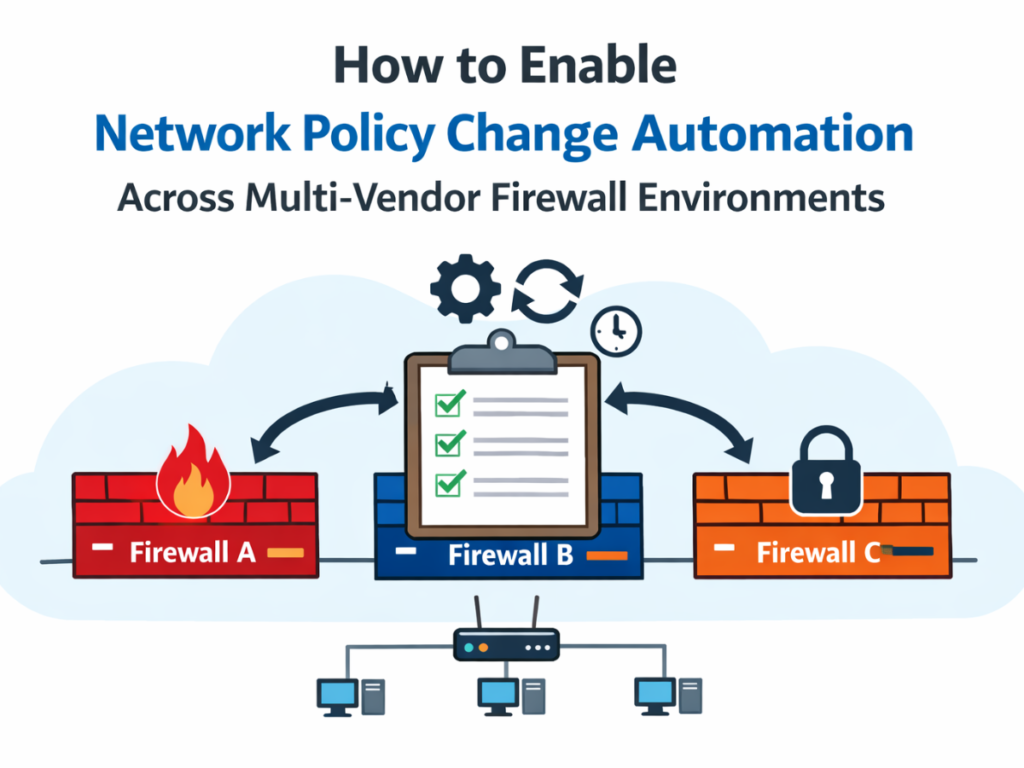
Blog Overview
This blog explores how organizations can automate firewall changes across different vendors while improving operational efficiency. You will learn why automation matters, when to implement it, how to choose the right approach, and the long term benefits of automated security policy management.
Introduction
Managing security across multiple firewalls from different vendors can quickly become complex. Many businesses struggle with inconsistent rules, delayed approvals, and increased security risks. In this blog, you will learn how to implement network policy change automation across multi vendor firewall environments. You will also discover practical strategies, real world scenarios, and how automation improves visibility and compliance.
For businesses that rely on secure and scalable infrastructure, automation is no longer optional. With growing cloud adoption and hybrid networks, firewall change management automation helps teams reduce manual work while improving security posture.
The Challenge of Multi Vendor Firewall Environments
Many organizations use firewalls from different vendors to meet various operational needs. While this provides flexibility, it also creates complexity. Security teams often manage different interfaces, rule formats, and approval workflows.
For example, a security engineer might need to update rules on multiple firewalls manually. This process increases the chance of errors and delays. Without network security policy management, teams struggle to maintain consistency across environments.Manual processes also slow down business operations. When application teams request access changes, delays can impact productivity and customer experience.
Importance of Network Policy Change Automation
Implementing network policy change automation helps organizations standardize processes across vendors. Automation tools provide centralized visibility, automated approvals, and compliance checks.
This means security teams can
- Reduce manual errors
- Speed up change approvals
- Maintain compliance with policies
- Improve visibility across environments
In many cases, automation also helps organizations respond faster to security threats. Instead of manual updates, automated workflows apply changes quickly and accurately.
Real- Life Cases Where Automation is Useful
Businesses often face situations where firewall changes are frequent. For example, a retail company launching a new online store needs to update multiple firewalls. Without firewall change management automation, this process could take days.
Another scenario involves cloud migration. As companies move applications to cloud environments, firewall policies need constant updates. Automated security policy management ensures changes are consistent and compliant. These real world examples show how automation improves both agility and security.
Benefits of Network Security Policy Management beyond Cost Savings
Automation delivers more than financial savings. It improves operational efficiency and reduces risks.
Key benefits include
- Faster deployment of applications
- Improved compliance and audit readiness
- Reduced human errors
- Better collaboration between teams
- Increased network visibility
With network security policy management, organizations gain control over their security environment while supporting business growth.
Picking the Right Automation Strategy
Selecting the right approach requires careful planning. Businesses should consider the following factors
- Compatibility with multiple firewall vendors
- Integration with existing security tools
- Policy standardization capabilities
- Automation workflow flexibility
- Reporting and compliance features
Many organizations also benefit from starting with a phased approach. Begin with high impact policies, and then expand automation gradually.
A Smarter Way to Manage Security Policies
Modern businesses need flexible and scalable security solutions. Network policy change automation allows teams to adapt quickly while maintaining strong security standards.
For example, organizations using hybrid infrastructure often rely on automation to maintain consistent rules across data centers and cloud environments. This approach simplifies operations and strengthens security posture.
Final Thoughts
Managing multi vendor firewalls does not have to be complicated. With firewall change management automation and automated security policy management, organizations can streamline operations, improve compliance, and reduce risks.
If your business is looking to simplify firewall operations and improve security efficiency, explore automation solutions from Opinnate. Visit our website to learn how intelligent network security policy management can transform your infrastructure and help your team work smarter.
Frequently Asked Questions
1. What is network policy change automation?
Network policy change automation is the process of automating firewall rule updates and policy changes across multiple systems to improve efficiency and reduce errors.
2. Why is firewall change management automation important?
It reduces manual work, improves compliance, and speeds up security updates across multiple firewall vendors.
3. Can automation work across different firewall vendors?
Yes, modern automation platforms support multi vendor environments and provide centralized control.
4. How does automated security policy management improve compliance?
Automation ensures policies follow predefined rules and maintains audit ready documentation.
5. When should businesses implement network security policy management?
Businesses should implement it when firewall complexity increases, changes become frequent, or compliance requirements grow.