


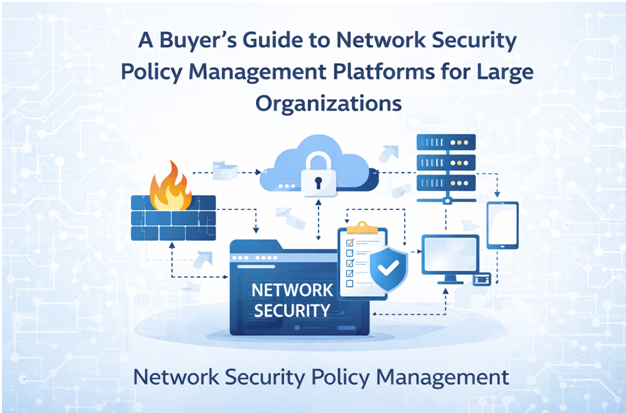
Blog Overview
Large organisations manage complex networks, multiple users, and evolving cyber risks every day. Choosing the right network security policy management platform can be challenging when security requirements grow quickly. In this blog, you will learn how to evaluate platforms, understand key features, and choose the right solution for your business needs. You will also discover practical tips, benefits, and real-world scenarios to guide your decision.
Understanding Network Security Policy Management
Network security policy management helps organisations control, monitor, and automate security rules across their entire infrastructure. Large businesses often use multiple firewalls, cloud platforms, and remote environments. Without proper network security policy management, maintaining consistent security rules becomes difficult.
For example, a retail company operating across several locations may struggle to update firewall rules quickly. A centralised platform helps automate policy changes and reduces human errors. This improves overall network security management and ensures compliance with industry standards.
Why Large Organisations Need Advanced Security Platforms
Large organisations handle sensitive data, customer information, and business-critical applications. This makes them prime targets for cyber threats. Enterprise network security management platforms provide visibility across networks, helping teams detect risks early.
A strong platform also improves network security assessment by identifying vulnerabilities before they become threats. This proactive approach helps organisations avoid downtime and financial loss.
In many cases, businesses expand quickly. Without proper enterprise network security management, growth can introduce new security gaps. A dedicated platform ensures security policies remain consistent across all locations.
Key Features to Look For in Network Security Policy Management Platforms
When selecting a platform, organisations should consider the following features:
- Centralised Policy Management
Centralised control simplifies rule creation and enforcement. This improves network security policy management across different environments. - Automation Capabilities
Automation reduces manual tasks and speeds up policy deployment. This is especially useful for large teams managing complex infrastructures. - Compliance Monitoring
Regulatory compliance is critical for large organisations. Built in monitoring tools help track policy changes and generate reports. - Risk Analysis and Network Security Assessment
Advanced platforms offer continuous network security assessment. This helps businesses identify weaknesses and improve protection strategies. - Scalability
As businesses grow, security platforms should grow with them. Scalable solutions support future expansion without major upgrades.
Signs Your Organisation Needs a Stronger Security Platform
Growing businesses often face hidden security challenges. Here are common signs that indicate you need enterprise network security management:
- Your organisation uses multiple firewalls and cloud platforms.
- Policy updates take too long to implement
- Security audits reveal inconsistencies
- Manual processes increase risk of human error
- Your IT team struggles with visibility across networks
If these issues sound familiar, investing in network security policy management becomes essential.
Operational Benefits beyond Security
Security platforms offer benefits beyond protection. They improve operational efficiency, reduce downtime, and support business growth.
For example, automated policy updates allow IT teams to focus on strategic initiatives. Faster deployment improves productivity. Better visibility helps organisations make smarter decisions.
Strong network security management also improves collaboration between departments. Security teams, IT teams, and leadership gain shared insights and better communication.
How to Choose the Right Platform
Choosing the right platform requires careful evaluation. Consider these practical tips:
- Define your security goals
- Assess current infrastructure
- Look for automation features
- Evaluate reporting capabilities
- Choose scalable solutions
- Check vendor support and expertise
Many organisations also request demos before making final decisions. This helps ensure the platform meets business requirements.
A Real-World Business Scenario
Imagine a growing e-commerce company expanding globally. As the company adds new servers and cloud applications, security policies become difficult to manage. Implementing enterprise network security management allows the company to automate policies, improve compliance, and reduce risks.
This approach improves network security assessment and ensures consistent protection across regions.
Final Thoughts
Choosing the right network security policy management platform is a strategic decision for large organisations. The right solution improves visibility, strengthens protection, and supports business growth. If your organisation is looking to enhance network security management and streamline operations, now is the perfect time to explore professional solutions. Visit Opinnate to discover how advanced enterprise network security management can transform your security strategy.
Frequently Asked Questions
1. What is network security policy management?
Network security policy management helps organisations control and automate security rules across their networks.
2. Why is network security assessment important?
Network security assessment identifies vulnerabilities and helps prevent cyber threats.
3. Who needs enterprise network security management?
Large organisations with complex infrastructure benefit the most from enterprise network security management.
4. How does automation improve network security management?
Automation reduces manual errors and speeds up policy deployment.
5. What should I look for in a security platform?
Look for automation, scalability, compliance monitoring, and centralised management features.