


Blog Overview
Cybersecurity is no longer a concern reserved for large enterprises. Today, businesses of every size rely on digital systems, cloud applications, and connected devices to serve customers and manage daily operations. As cyber threats become more sophisticated, traditional approaches to firewall management are no longer enough.
In this blog, you will learn how modern firewall risk assessment services have evolved from periodic reviews to continuous monitoring and analysis. You will also discover why proactive firewall management is becoming essential for business security, compliance, and operational efficiency.
Understanding the Shift in Firewall Security
Not long ago, many organizations reviewed firewall settings once or twice a year. Security teams would analyze configurations, identify risks, and make adjustments when issues appeared. The problem is that modern cyber threats move much faster than annual reviews.
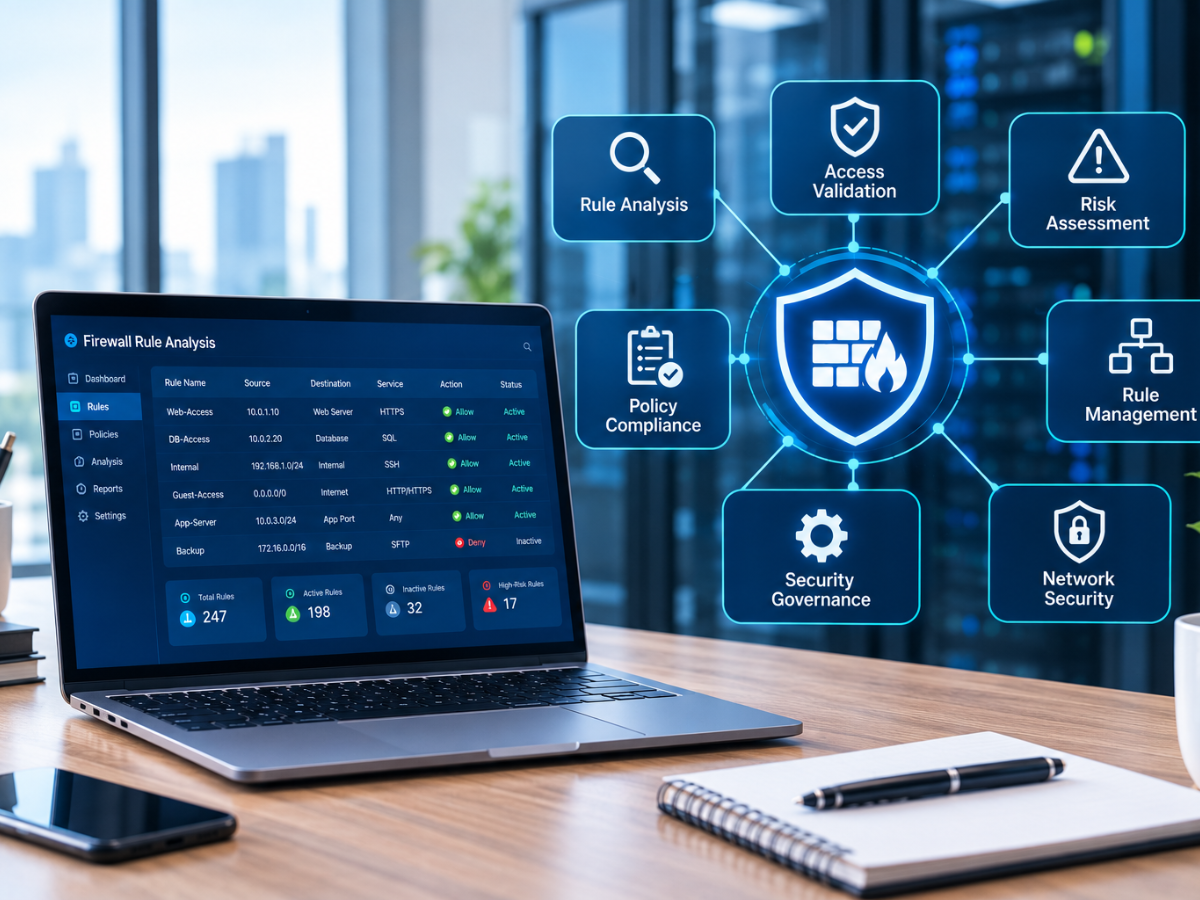
A firewall rule that was safe six months ago may now expose critical business systems. New applications, cloud services, and remote work environments constantly change network traffic patterns. This means businesses need ongoing visibility rather than occasional checkups. This shift has created a growing demand for advanced firewall risk assessment services that continuously evaluate firewall health, policy effectiveness, and security risks.
Why Firewall Risk Assessment Matters More Than Ever
A comprehensive firewall risk assessment helps organizations understand whether their firewall rules align with current business and security requirements. For example, a retail business may add new payment processing systems or customer service platforms throughout the year. Without regular analysis, outdated rules can remain active and create unnecessary vulnerabilities.
Continuous assessments help organizations:
- Identify risky firewall configurations
- Detect unused or overly permissive rules
- Improve compliance readiness
- Reduce potential attack surfaces
- Support faster incident response
In many cases, businesses discover hundreds of unnecessary firewall rules that have accumulated over time.
From Reactive Reviews to Continuous Analysis
The biggest change in modern cybersecurity is moving from reactive security practices to proactive monitoring. Instead of waiting for an audit, security incident, or compliance review, organizations now leverage continuous monitoring solutions that evaluate firewall performance in real time.
This approach combines:
- Ongoing policy analysis
- Automated risk identification
- Compliance validation
- Security intelligence integration
- Continuous optimization
When paired with multi vendor firewall policy management, businesses gain visibility across different firewall platforms from a centralized perspective. This is especially valuable for organizations managing hybrid environments that include cloud networks, branch offices, and data centers.
The Hidden Cost of Outdated Firewall Policies
Many businesses focus on preventing cyberattacks but overlook the operational challenges caused by poor firewall governance. For example, outdated firewall rules can slow down application deployment, create troubleshooting delays, and increase administrative workload.
Over time, unmanaged rule growth can result in:
- Increased security risks
- Compliance violations
- Longer change approval cycles
- Reduced network performance
- Higher operational costs
This is why organizations increasingly invest in structured firewall rule lifecycle management programs that govern every rule from creation to retirement.
A Day in the Life of a Growing Business
Imagine a growing retail company expanding its online sales platform. New applications are added regularly. Employees access systems remotely. Third party vendors require temporary network access. Without visibility, firewall rules accumulate quickly.
A continuous assessment approach helps identify unnecessary access permissions, validates security policies, and ensures only approved traffic reaches critical systems. The result is stronger security without disrupting business operations.
Signs Your Business Needs Advanced Firewall Oversight
Many organizations wait until an audit reveals problems. Instead, look for these warning signs:
-
Frequent Firewall Changes
If firewall modifications occur regularly, continuous monitoring becomes essential. -
Multiple Firewall Vendors
Managing different firewall technologies can create visibility gaps. Multi vendor firewall policy management helps unify oversight. -
Compliance Pressure
Industries subject to regulatory requirements need consistent security validation and documentation. -
Slow Security Reviews
If policy reviews take weeks or months, automation can significantly improve efficiency.
How Firewall Rule Lifecycle Management Improves Security
Effective firewall rule lifecycle management ensures every rule has a documented purpose, approval process, and expiration timeline.
This approach helps organizations:
- Reduce rule complexity
- Remove obsolete permissions
- Strengthen compliance efforts
- Improve audit readiness
- Support business agility
Similarly, strong firewall rule change management processes ensure modifications are properly reviewed, tested, and approved before implementation. This minimizes configuration errors that often lead to security incidents.
Choosing the Right Firewall Management Approach
When evaluating firewall management solutions, businesses should prioritize:
- Continuous risk visibility
- Automated policy analysis
- Centralized reporting
- Compliance support
- Scalable management capabilities
Look for providers with proven expertise in firewall governance, risk analysis, and policy optimization across complex environments. The right partner can help transform firewall management from a reactive task into a strategic security advantage.
Final Thoughts
The cybersecurity landscape continues to evolve, and traditional firewall reviews are no longer enough. Modern organizations need continuous visibility, proactive risk identification, and streamlined policy governance to stay secure and compliant.
By investing in advanced firewall risk assessment services, strengthening firewall rule change management, and embracing multi vendor firewall policy management, businesses can reduce risk while improving operational efficiency. Ready to modernize your firewall security strategy? Visit Opinnate and explore how expert security and compliance solutions can help your organization build stronger, smarter, and more resilient network defenses for the future.
Frequently Asked Questions
1. What are firewall risk assessment services?
Firewall risk assessment services evaluate firewall configurations, policies, and rules to identify security vulnerabilities, compliance gaps, and operational risks.
2. How often should a firewall risk assessment be performed?
While traditional assessments were conducted annually, modern best practices recommend continuous monitoring and regular reviews to address evolving threats.
3. What is firewall rule lifecycle management?
Firewall rule lifecycle management is the process of creating, reviewing, maintaining, and retiring firewall rules throughout their operational lifespan.
4. Why is firewall rule change management important?
Firewall rule change management ensures modifications are reviewed, approved, and documented properly, reducing the risk of security misconfigurations.
5. What are the benefits of multi vendor firewall policy management?
Multi vendor firewall policy management provides centralized visibility and control across different firewall platforms, improving consistency, security, and operational efficiency.