


Blog Overview
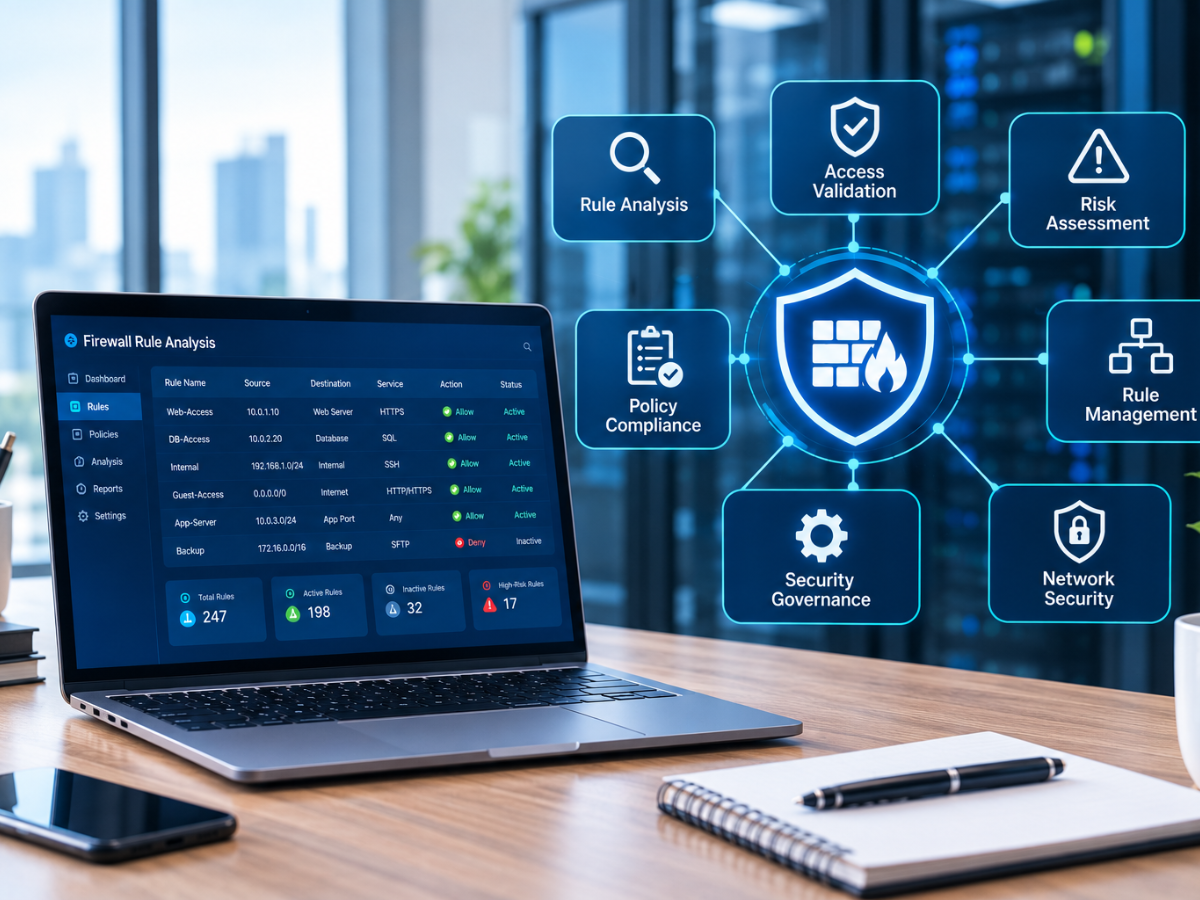
Modern cyber threats are becoming smarter and more frequent. Traditional firewall monitoring is no longer enough for businesses that handle sensitive customer data or rely on connected systems. Advanced Firewall Analysis gives security team’s deeper visibility into network activity, risky configurations, and policy gaps that may expose systems to attacks. This guide explains why proactive security matters, how firewall analyzers strengthen protection, and what businesses should look for when improving network defenses.
Introduction
Today, all businesses rely on digital systems to run their business, communicate with customers, make payments, and communicate with each other. But more networks mean more security risks. A single missed firewall rule or old access permission can quietly open doors for cybercriminals. This can lead to downtime, data loss, compliance issues and damaged customer trust for shop owners and growing businesses.
In this blog, you’ll learn how advanced firewall analysis can help businesses identify hidden vulnerabilities before attackers do. You will also learn how modern security strategies such as firewall policy management and firewall change management automation improve operational efficiency while reducing cyber risks.
Why is Attack Surface Reduction Important?
Every connected device, application or open network port increases a company’s attack surface. This means hackers have more entry points to exploit.
For example, a retail business may add new payment terminals, cloud software, remote employee access, and third-party integrations over time. Without regular reviews of network security, firewall rules that are no longer relevant can stay active for years. Many companies don’t realise these unused rules put sensitive systems at risk.”
Reducing the attack surface reduces access to only what is necessary and gives businesses more control over their network. This reduces the chance of ransomware attacks, unauthorised access and costly operational disruptions.
Advanced Firewall Analysis: What You Need to Know
Advanced firewall analysis is more than just checking if a firewall is on. It looks at the interplay of the firewall rules with actual network traffic, user access, and evolving threats.
What a modern firewall analyser detects:
• Firewall rules not used
• Misconfigured access permissions
• Open ports with risk
• Rules that conflict or shade
• Gaps in compliance
• Unusual traffic patterns
This visibility allows security teams to react faster and improve protection without slowing down the business. Many businesses find hundreds of outdated rules during a firewall security audit. You immediately reduce your risk exposure and improve your network performance by removing unnecessary rules.
How Firewall Analyser Tools Improve Security
A firewall analyser helps organisations to understand what is actually happening inside their network environment. Consider a business that has just opened a number of locations. Other teams can request temporary access for vendors, remote staff or software updates. Over time, these temporary permissions tend to become permanent because no one reviews them. These risky configurations are automatically identified and flagged for review by advanced firewall analysis tools. This means that businesses can:
Expand Visibility
Security teams get a unified view of firewall activity across multiple environments.
Faster Threat Detection
It can find potential vulnerabilities before attackers can exploit them.
Support Conformance Requirements
Companies that deal with customer data need regular network security assessments and firewall security audits.
Troubleshooting: It’s Easy
When network problems happen, teams can quickly see which firewall rule is causing the problem.
The Role of Firewall Policy Management
As businesses grow, so does the complexity of firewall rules. Structured firewall policy management is required to prevent networks from becoming hard to manage and prone to human error. Strong firewall policy management helps companies to:
• Standardised security policies
• Eliminate superfluous rules
• Increase audit preparedness
• Simplify configuration errors
• Consistent access control
This helps to create a more scalable and organised security environment for companies that are growing.
Why Is It Important to Automate Firewall Change Management
Managing firewall changes manually is time consuming and risky. One incorrect configuration can unintentionally expose critical systems. Firewall change management automation helps businesses streamline updates while reducing human error. Automation improves:
Speed
Security teams can process rule changes faster.
Accuracy
Automated validation helps prevent risky misconfigurations.
Compliance Tracking
Every change is documented for easier audits.
Operational Efficiency
Teams spend less time on repetitive manual tasks.
For businesses with growing digital infrastructure, automation provides both security and scalability.
Real Business Risks Many Companies Overlook
Cybersecurity is not only an IT problem anymore. It has a direct impact on business continuity and customer confidence. One overlooked firewall vulnerability can result in:
• Operational downtime
• Unrealised sales
• Fines and penalties
• Trust problems with customers
• costly recovery costs
For example, if a point of sale system is compromised due to poor firewall controls, customer payment data could be at risk. This can hurt a brand’s reputation for years to come.
This is why regular firewall security audits and proactive monitoring are becoming a must for businesses of all sizes.
Practical Benefits beyond Security
Advanced firewall analysis does more than just enhance protection.
Businesses also gain from:
• Improved network performance
• Increased operational efficiency
• Less time offline
• Enhanced inter-system visibility
• Simpler IT management
This means that security investments also help with smoother day-to-day operations and long-term growth
How to Select the Best Security Approach
When evaluating security solutions, businesses should look for providers that can offer:
• Thorough firewall inspection
• Automated reporting tools.
• Real-time monitoring
• Support for firewall policy management
• Solutions scalable for growing networks
• Periodic network security reviews
The right approach should balance security, efficiency and long-term business flexibility.
Final Thoughts
The landscape of cyber threats is changing. Businesses can’t afford to rely on antiquated security methods. Advanced firewall analysis helps organisations reduce attack surface and improve network visibility and operational resilience.
Regular firewall security audits and firewall change management automation can help businesses stay ahead of security risks while supporting growth and customer trust. Smarter firewall policy management can help. Find out how advanced security solutions can help protect your business network. Learn more about the services offered by Opinnate and find smarter ways to strengthen your cybersecurity strategy.
Frequently Asked Questions
1. What is firewall analysis?
Firewall analysis involves analysing firewall rules, traffic and configuration to identify security risks, policy problems and potential vulnerabilities.
2. What is a firewall analyser and why is it important?
A firewall analyser helps organisations detect risky configurations, monitor network traffic, and gain overall visibility into their cybersecurity.
3. How often should businesses conduct network security assessments?
Most businesses should conduct regular network security assessments, particularly after infrastructure changes, software upgrades or security incidents.
4. What is firewall change management automation?
Firewall change management automation is useful for streamlining firewall updates and approvals, minimising manual errors and improving compliance tracking.
5. Why do we need firewall security audits?
Firewall security audits help organisations discover outdated rules, compliance gaps, and hidden vulnerabilities that can heighten cyber risk.