



PCI DSS Firewall Requirements: Complete Guide to Cardholder Data Security
In today’s digital economy, businesses process thousands of card transactions every day. Whether you run an eCommerce store, a healthcare organisation, a retail chain, or a financial service company, protecting customer payment data is no longer optional. Cyberattacks are increasing rapidly, and organisations that fail to secure payment systems often face financial penalties, reputational damage, and legal consequences. This is where firewall compliance becomes critical. One of the core requirements of PCI DSS focuses on firewall security because firewalls act as the first line of defence against unauthorised access, malware, and network intrusions.
Understanding PCI DSS firewall requirements is essential for businesses that handle payment card information. Without a properly configured firewall, sensitive cardholder data can become vulnerable to cybercriminals, resulting in serious compliance violations. This complete guide explains everything you need to know about firewall compliance for PCI DSS, including requirements, best practices, challenges, implementation strategies, and compliance tips.
What Is PCI DSS?
The Payment Card Industry Data Security Standard, commonly known as PCI DSS, is a set of cybersecurity standards created to protect payment card data. It was developed by the PCI Security Standards Council and applies to any organisation that stores, processes, or transmits cardholder information.
PCI DSS includes several security requirements designed to reduce fraud and strengthen payment system security. Among these requirements, network protection and firewall implementation play a central role.
Businesses that fail to meet PCI DSS standards may face the following:
- Financial penalties
- Increased transaction fees
- Legal liabilities
- Data breach costs
- Loss of customer trust
- Suspension of payment processing privileges
Because of these risks, organisations prioritise firewall compliance as a key component of their cybersecurity strategy.
Why Firewall Compliance Matters for PCI DSS
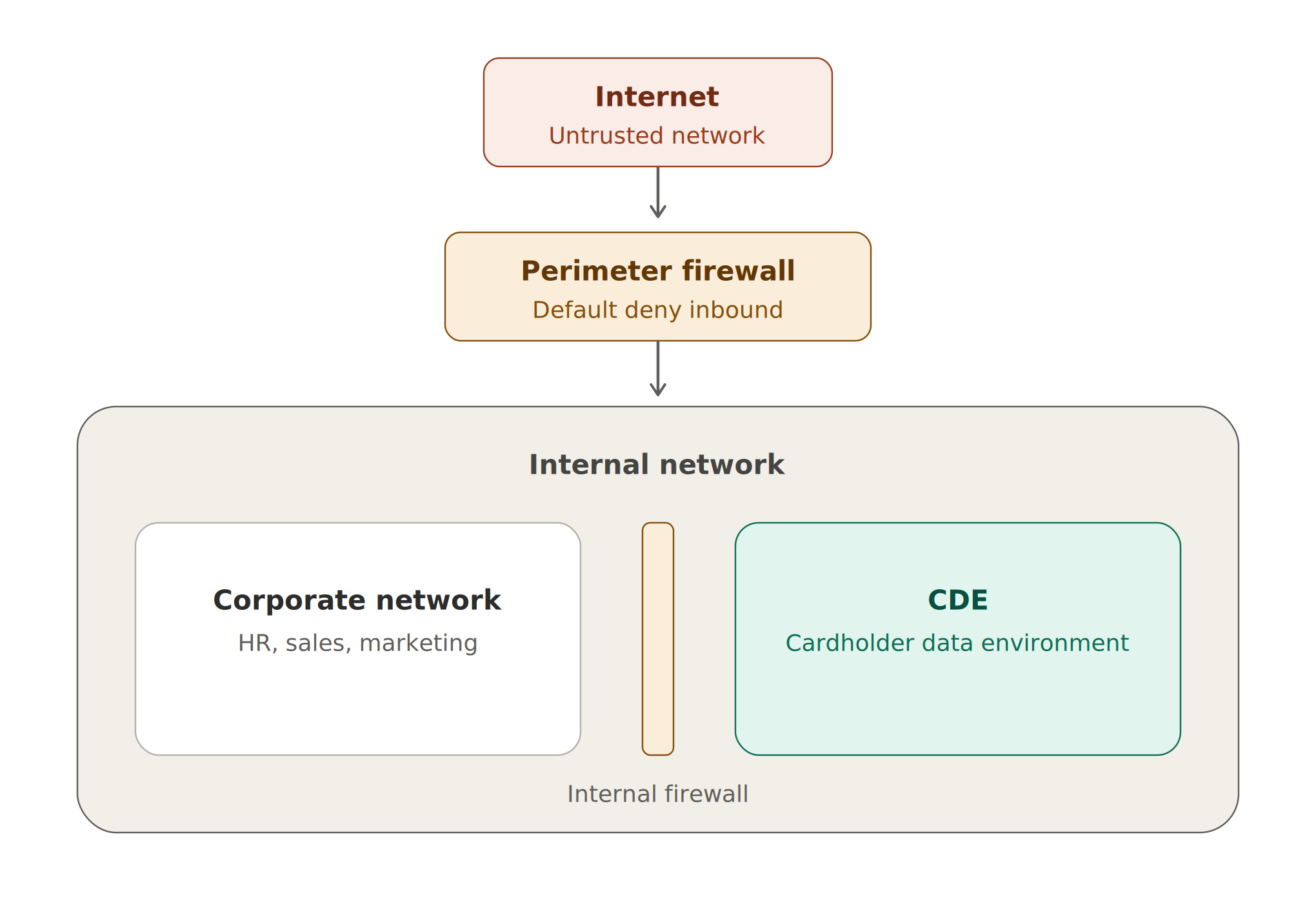
Firewalls protect internal systems from external threats by monitoring and filtering incoming and outgoing network traffic. They create a barrier between trusted and untrusted networks. Under PCI DSS firewall requirements, businesses must establish secure network configurations that prevent unauthorised users from accessing cardholder data environments. A properly managed firewall helps organisations:
- Block malicious traffic
- Prevent unauthorised access
- Reduce attack surfaces
- Monitor suspicious activity
- Segment sensitive networks
- Strengthen compliance posture
In simple terms, firewall compliance helps create a secure digital perimeter around sensitive payment information.
Understanding PCI DSS Firewall Requirements
One of the foundational PCI DSS controls is Requirement 1, which focuses entirely on firewall and network security. The goal is to install and maintain network security controls that protect cardholder data. Here are the major components of PCI DSS firewall requirements.
· Install and Maintain Firewall Configurations
Organisations must deploy firewalls at every internet connection and between trusted and untrusted networks.
These configurations should:
- Restrict unnecessary traffic
- Allow only approved services
- Protect payment environments
- Prevent unauthorised communication
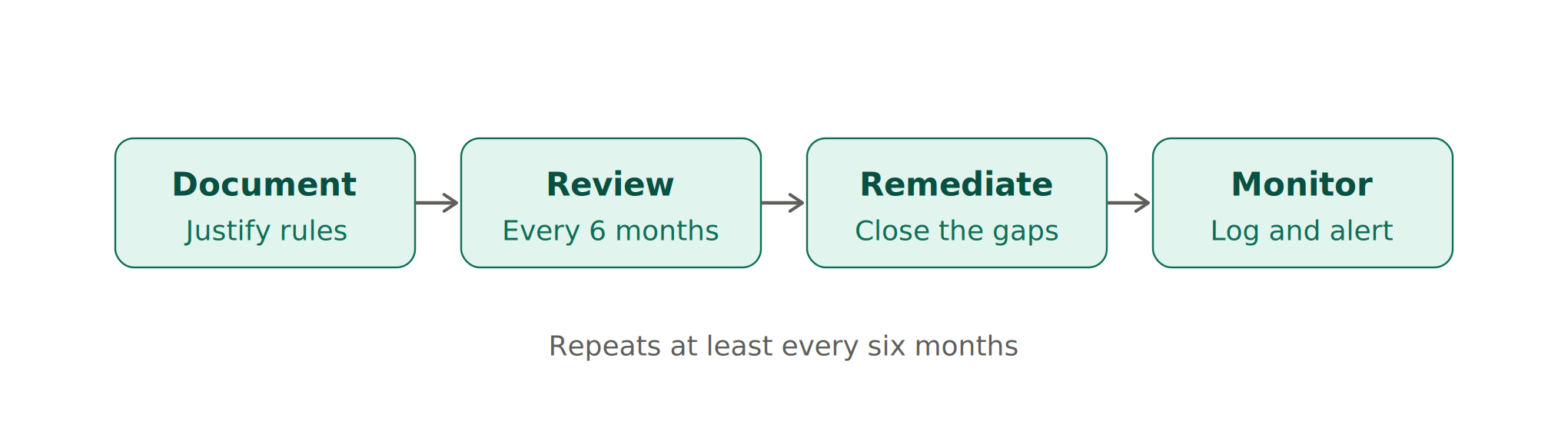
Every firewall rule must have a clear business justification.
· Restrict Inbound and Outbound Traffic
Businesses should only allow traffic that is necessary for operational purposes. PCI DSS requires organisations to:
- Deny all unauthorised inbound traffic
- Control outbound connections
- Limit risky protocols
- Use secure communication channels
This principle minimises the chances of attackers gaining network access.
· Secure Router and Firewall Configurations
Default vendor passwords and insecure settings are major cybersecurity risks.
PCI DSS firewall requirements demand that organisations:
- Change default passwords immediately
- Remove unnecessary services
- Disable insecure ports
- Update firmware regularly
Failure to secure default configurations is one of the most common compliance mistakes.
· Network Segmentation
Although network segmentation is not mandatory, it is strongly recommended.
Segmentation separates the cardholder data environment from the rest of the business network. This reduces the scope of compliance and limits exposure during a cyberattack.
Benefits include:
- Reduced compliance costs
- Improved performance
- Better threat isolation
- Easier security management
Strong firewall compliance strategies usually include segmentation.
· Documentation and Rule Reviews
PCI DSS requires organisations to maintain detailed documentation of firewall configurations.
Businesses must:
- Review firewall rules regularly
- Document all changes
- Maintain network diagrams
- Validate access permissions
Regular audits help identify outdated or risky configurations.
Types of Firewalls Used for PCI DSS compliance
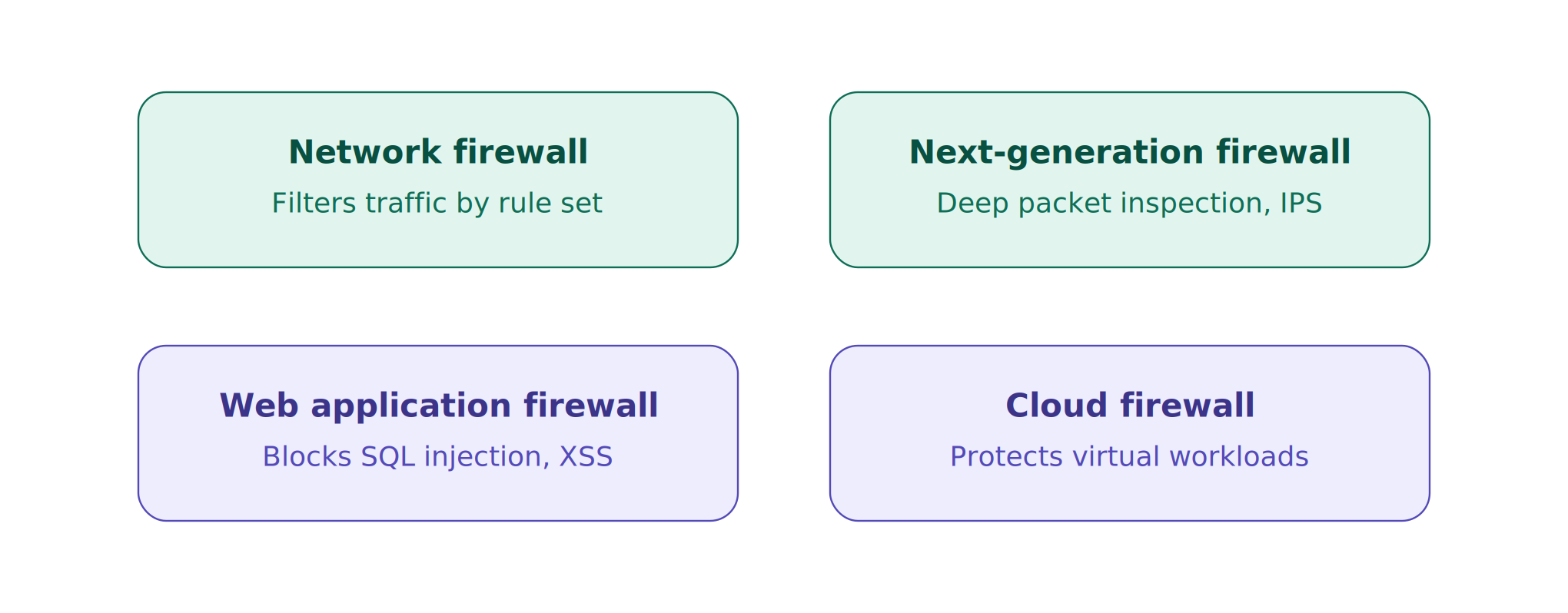
Different organisations use different firewall technologies depending on their infrastructure and security requirements.
Network Firewalls
These are traditional firewalls placed between networks to filter traffic based on rules and policies. They are commonly used to:
- Block unauthorised traffic
- Control access
- Monitor network communication
Next-Generation Firewalls
Next-generation firewalls offer advanced features such as the following:
- Intrusion prevention
- Application awareness
- Threat intelligence
- Deep packet inspection
These firewalls provide stronger protection for modern payment environments.
Web Application Firewalls
A web application firewall protects websites and online applications from attacks such as
- SQL injection
- Cross-site scripting
- Application layer attacks
Businesses operating eCommerce platforms often rely on these solutions.
Cloud Firewalls
Organisations using cloud environments can deploy virtual firewalls to secure workloads and cloud infrastructure. Cloud firewalls help maintain firewall compliance in hybrid and remote work environments.
Common Firewall Compliance Challenges
Many organisations struggle to meet PCI DSS firewall requirements because of evolving threats and complex network infrastructures.
Poor Rule Management
Over time, firewall rules become outdated or excessive. Unused rules create security gaps and increase compliance risks. Regular rule reviews are essential.
Lack of Visibility
Large organisations often lack visibility into network traffic and firewall configurations.
Without centralised monitoring, suspicious activity may go unnoticed.
Misconfigured Firewalls
Misconfigurations are among the leading causes of data breaches.
Examples include:
- Open ports
- Weak access controls
- Unrestricted traffic
- Insecure remote access
Even a single error can compromise cardholder data.
Rapid Infrastructure Changes
Cloud adoption, remote work, and digital transformation introduce new security challenges. Organisations must constantly adapt firewall policies to maintain compliance.
Best Practices for Firewall Compliance
Implementing strong firewall strategies helps businesses stay compliant while improving cybersecurity resilience.
Follow the Principle of Least Privilege.
Only allow users and systems to access resources necessary for their roles. Restricting access reduces the likelihood of insider threats and unauthorised activity.
Perform Regular Firewall Audits
Frequent audits help identify:
- Unused rules
- Weak configurations
- unauthorised changes
- Compliance gaps
Routine assessments are essential for maintaining firewall compliance.
Monitor Traffic Continuously
Real-time monitoring allows businesses to detect unusual traffic patterns and potential attacks quickly.
Security teams should use the following:
- SIEM tools
- Threat intelligence platforms
- Automated alerts
Continuous visibility strengthens security operations.
Use multi-factor authentication.
Administrative access to firewalls should always require multi-factor authentication.
This prevents attackers from exploiting stolen credentials.
Keep Firmware and Software Updated.
Outdated systems are highly vulnerable to exploitation.
Organisations should regularly:
- Install security patches
- Update firmware
- Replace unsupported devices
Patch management is a critical part of PCI DSS security practices.
Implement Strong Logging and Reporting
PCI DSS requires businesses to maintain logs for security events and firewall activity.
Logs should include:
- Access attempts
- Configuration changes
- Failed logins
- Security alerts
Proper logging supports audits and incident investigations.
How Firewall Compliance Supports Cybersecurity
Although PCI DSS focuses on payment security, firewall compliance delivers broader cybersecurity benefits.
Businesses with strong firewall controls often experience the following:
- Fewer cyber incidents
- Improved network visibility
- Better threat detection
- Reduced operational risks
- Stronger customer confidence
Compliance frameworks often improve overall security maturity.
Firewall Compliance for Cloud Environments
Modern organisations increasingly rely on cloud services, making cloud firewall security essential.
Cloud-based PCI DSS compliance requires businesses to:
- Configure virtual firewalls correctly
- Secure APIs
- Restrict cloud access
- Monitor cloud traffic
- Implement zero-trust policies
Cloud misconfigurations are a growing cause of breaches, so organisations must apply strict security controls.
The Role of Managed Security Providers
Many businesses partner with managed security service providers to simplify firewall compliance.
These providers help with:
- Firewall monitoring
- Threat detection
- Compliance audits
- Incident response
- Configuration management
Managed services are especially valuable for small- and mid-sized businesses with limited internal security resources.
Firewall Compliance Audit Checklist
Here is a practical checklist businesses can use to evaluate PCI DSS readiness.
Firewall Configuration Checklist
- Firewalls installed at all network boundaries
- Default passwords removed
- Unnecessary ports disabled
- Access rules documented
- Secure remote access configured
- Rule sets reviewed regularly
- Firmware updated
- Traffic logging enabled
- Multi-factor authentication implemented
- Network segmentation validated
Using a structured checklist helps maintain consistent compliance practices.
Consequences of Non-Compliance
Failing to meet PCI DSS firewall requirements can have serious consequences.
Potential outcomes include the following:
- Heavy financial penalties
- Lawsuits
- Regulatory investigations
- Customer loss
- Brand damage
- Operational disruption
In severe cases, businesses may lose the ability to process card payments entirely.
The cost of non-compliance is often far greater than the investment required for strong security controls.
Future Trends in Firewall Compliance
Cybersecurity continues to evolve, and firewall technologies are becoming more advanced.
Emerging trends include:
· AI-Driven Threat Detection
Artificial intelligence helps identify suspicious behaviour faster and improve automated threat responses.
· Zero Trust Security
Zero trust models assume no user or device should be trusted automatically. This approach strengthens access control and minimises risk.
· SASE Architecture
Secure Access Service Edge combines networking and security into a unified cloud-based model. This is becoming increasingly important for remote workforces.
· Automation and Orchestration
Automation reduces manual configuration errors and improves compliance management efficiency.
Businesses are investing heavily in automated security workflows.
How to Build a Strong Firewall Compliance Strategy
Organisations should treat firewall compliance as an ongoing cybersecurity process rather than a one-time requirement. A strong strategy typically includes:
- Risk assessment
- Firewall deployment
- Network segmentation
- Continuous monitoring
- Regular audits
- Employee security training
- Incident response planning
- Compliance reporting
Combining these elements creates a more resilient payment security environment.
Modern Challenges: Cloud and Agentic AI
As we move deeper into 2026, the complexity of managing PCI DSS firewall requirements increases with multi-cloud adoption. Consistency is the greatest challenge. A security rule in Google Cloud must mirror the logic of your on-premises Palo Alto or Fortinet devices.
Many industry leaders are now turning to “agentic AI” for compliance orchestration. These autonomous agents can monitor firewall logs in real-time, flagging unauthorised changes or identifying “shadow IT” instances that have bypassed standard security protocols. Integrating automation into your compliance workflow is no longer just a trend; it is a necessity for maintaining a 24/7 compliant state.
Final Thoughts
As cyber threats continue to grow, businesses handling payment card data must prioritise network security and regulatory compliance. Understanding and implementing PCI DSS firewall requirements is essential for protecting sensitive customer information and maintaining trust.
Strong firewall compliance practices not only help organisations meet industry standards but also strengthen their overall cybersecurity posture. From network segmentation and access control to continuous monitoring and advanced threat prevention, every layer of firewall security contributes to safer payment environments.
Businesses that invest in proactive firewall management, regular audits, and modern security technologies are better prepared to defend against evolving cyber threats while maintaining PCI DSS compliance successfully.
Frequently Asked Questions: PCI DSS Firewall Compliance
1. What is the main difference between firewalls and network security controls in PCI DSS 4.0.1?
The transition to version 4.0.1 reflects the shift toward cloud computing. While firewalls were traditionally physical hardware, ‘network security controls’ is a broader term encompassing virtual firewalls, cloud access control lists, and software-defined perimeters. The goal is to secure the data regardless of whether it lives on a physical server or in a virtualised cloud environment.
2. How often must I perform a review of my firewall rules?
PCI DSS requires a formal review of your network security control configurations at least once every six months. This process ensures that any temporary rules created for troubleshooting are removed and that every active rule still has a valid, documented business justification.
3. Can I use a single firewall for both my corporate network and my payment environment?
While it is technically possible, it is not recommended. Using a dedicated firewall for your Cardholder Data Environment (CDE) makes segmentation much simpler. If you use one firewall for everything, a single configuration error could expose your sensitive payment data to the rest of your company’s internal traffic.
4. What does the principle of least privilege mean for firewall compliance?
This principle dictates that your firewall should deny all traffic by default. You only open specific ports and protocols that are absolutely necessary for a business function. By keeping the doors closed unless they are specifically needed, you significantly reduce the surface area available for an attacker to exploit.
5. Is it mandatory to have a network diagram for PCI compliance?
Yes. You must maintain a current network diagram that shows all connections between the CDE and other networks, including any wireless networks. Auditors use this map to verify that your firewall rules correctly match the physical and logical flow of data.
6. Do these requirements apply to small businesses using cloud-based payment providers? Even if you use a third-party provider for payments, you are still responsible for the security of the network used to access those services. If your office computers or point of sale systems connect to the internet, you must ensure those connections are secured according to PCI standards to prevent data interception.
7. What is a business justification in the context of firewall rules?
A business justification is a written explanation for why a specific firewall rule exists. Instead of simply labelling a rule as “Port 80 Open”, you must document that “Port 80 is open for inbound web traffic to the public-facing web server.” This documentation is vital for passing a PCI audit.
8. How does network segmentation help reduce audit costs?
Segmentation acts as a barrier that keeps non-payment systems out of the scope of your audit. If your systems are properly segmented, the auditor only needs to evaluate the small portion of your network that actually touches cardholder data. This saves time, reduces complexity, and lowers the cost of the assessment.
9. Are internal firewalls required between different segments of my own network?
PCI DSS requires that you restrict traffic between the CDE and any other network. If you have different departments within your company, using internal firewalls to separate them ensures that a security breach in the marketing or HR department does not automatically give an intruder access to your payment systems.
10. Can I automate the process of firewall compliance?
Automation is becoming the gold standard for compliance in 2026. You can use automated tools to perform real-time auditing of your rule sets and alert your team the moment a configuration changes. This proactive approach is far more effective than waiting for a manual review every six months.